

Great Synagogue of Rashkov
The Great Synagogue of Rashkov (Raşcov) is in the village of Rashkov, located in the historic region of Podolia in Eastern Europe with Jewry community being an integral part of Podolian life. At present, Podolia extends to parts of Ukraine and Moldova. The village is on the left bank of the Dniester River, in today’s unrecognised Pridnestrovian Republic (Transnistria), which split from Moldova in 1990–92.
Rashkov’s significance in early Hasidism is well documented. According to the Rashkov Synagogue “Hay” heritage documentation, the village was home to one Hasidic dynasty descending directly from the circle of the Baal Shem Tov whose descendants led the Rashkov Hasidic line for nearly 250 years. He was an influential Jewish mystic with the title ‘master of the name’ (Baal Shem), given to those who were experts in the use of Divine names as techniques to reach ecstatic experiences and astral ascent. He is regarded as the founder of Hasidic Judaism, a heterogenous Jewish school of thought related Jewish mysticism and movement that emerged in the second half of the eighteenth century. The dynasty was founded by Rabbi Shabtai ben Zvi‑Hirsh (1655–1745), a recorded disciple and scribe of the Baal Shem Tov.
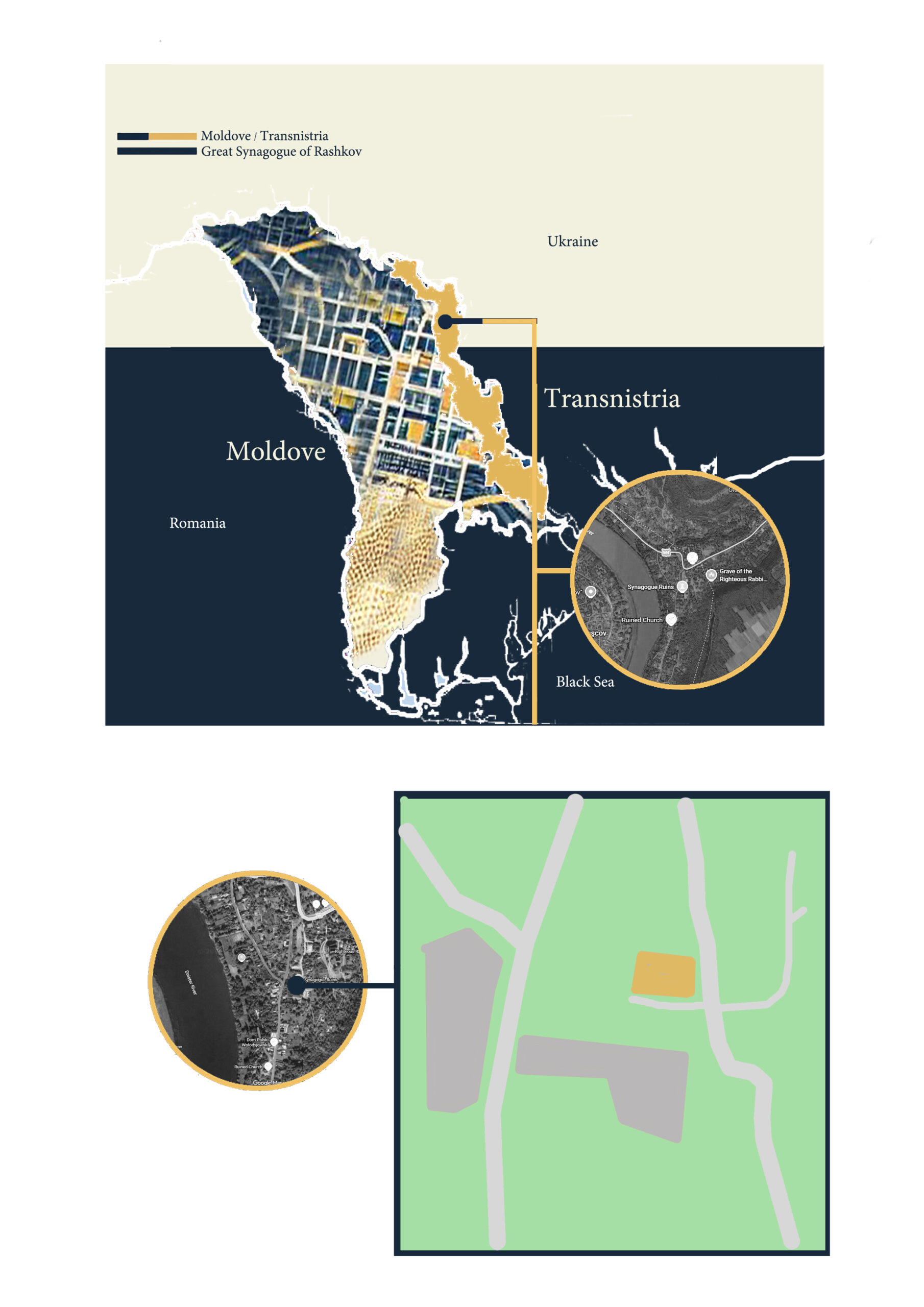
Site Location
A second Hasidic presence in Rashkov derived from the rabbinic lineage of Rabbi Yaakov Yosef of Polonne (d. 1783), one of the Baal Shem Tov’s closest students and author of Toldot Yaakov Yosef, who served as rabbi of Rashkov between 1748 and 1752. Thus, Rashkov hosted both a hereditary Hasidic dynasty and a major intellectual lineage linked directly to the Besht’s circle. The Great Synagogue, constructed around 1749 during Yaakov Yosef’s tenure, represents not only an architectural monument but also a rare convergence node of two foundational branches of early Hasidism. Therefore, in the eighteenth century, the village functioned as a meaningful node in the development of Jewish mysticism, shaped by figures connected to the Baal Shem Tov and sustained by both dynastic and intellectual Hasidic lineages.
At the end of 19th Century (1897) most villagers were from Jewish community with the official record of 3,201 people out of a total population of 5,823. By 1914, the village had four synagogues and a vibrant communal life with The Great Synagogue being its centre point. It was a rare intact synagogue compound including three smaller synagogues (two joined together), a historic well, and the remains of the Talmud‑Torah school, rabbi’s house, and a communal bathhouse used during ritual immersion in Judaism to achieve ritual purity.
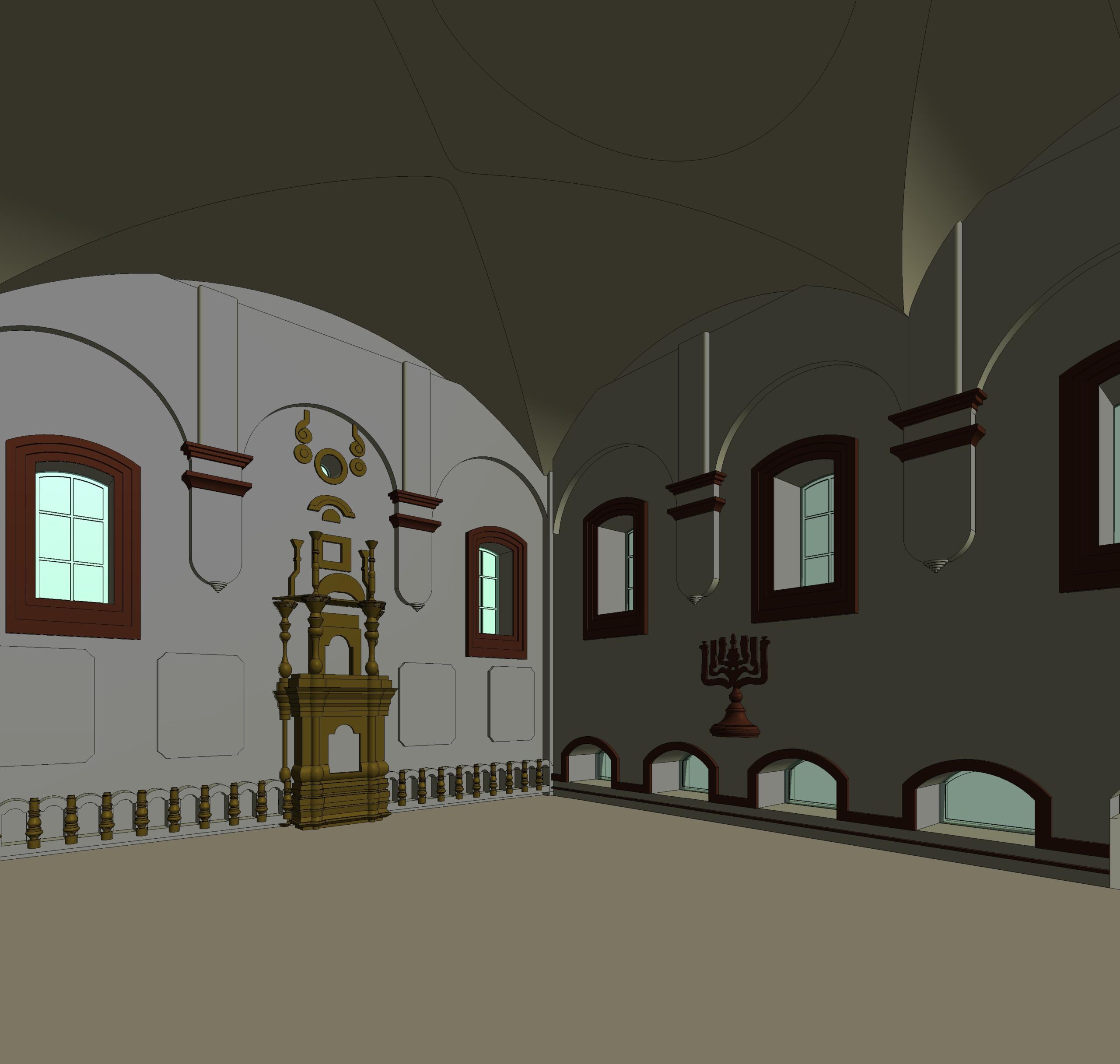
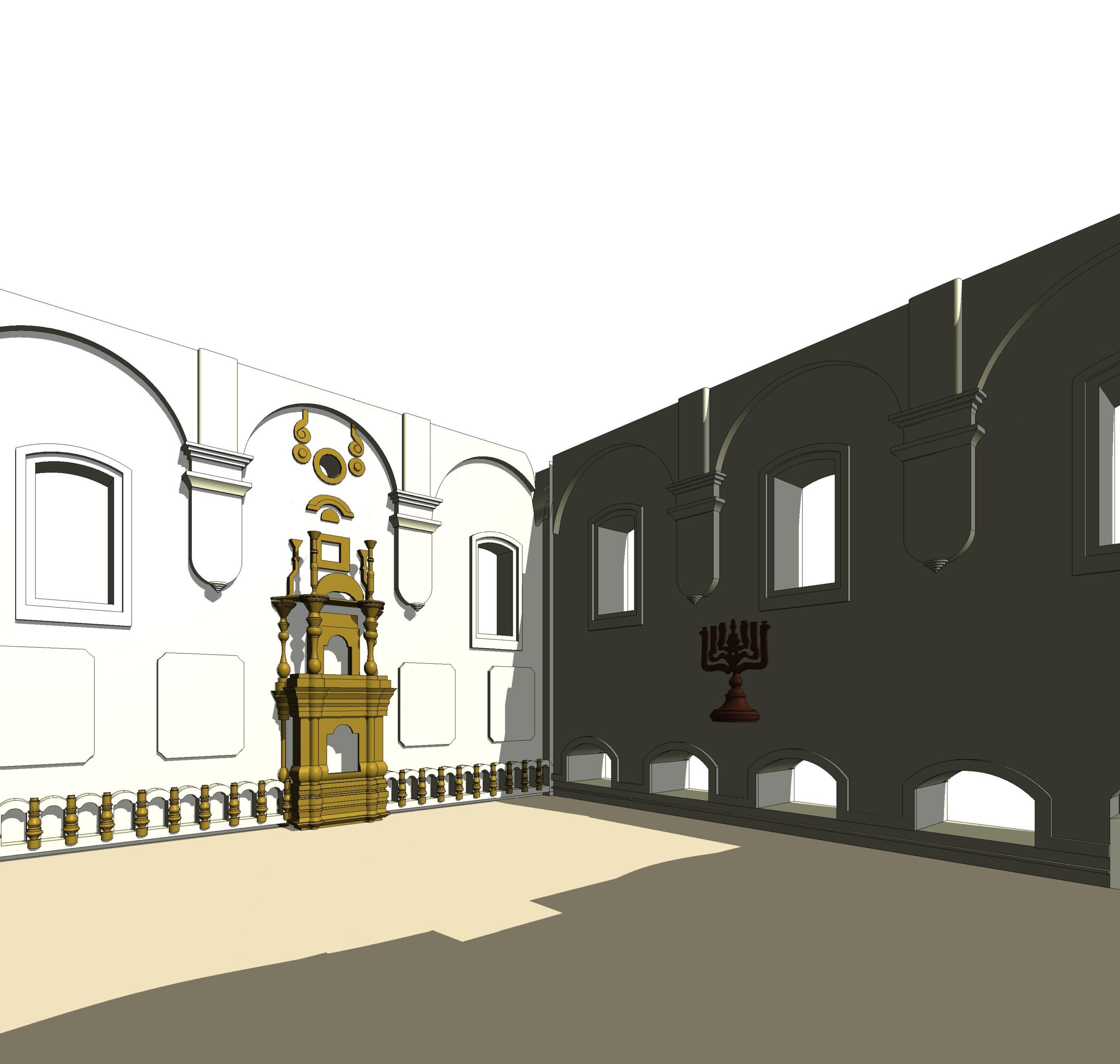
The Great Synagogue served as the spiritual centre of this community until 1930s when it was deliberately destroyed as part of the Soviet anti‑religious campaigns; only the walls survived. Although a roofless shell, it remained of the most architecturally and historically significant Jewish monuments in Eastern Europe and the largest surviving synagogue ruin in the region, a rare example of regional Baroque
architecture. Its relic is a memorial to a vanished Jewish world that existed in a crossroads of Moldovan, Ukrainian, Polish, and Jewish histories.
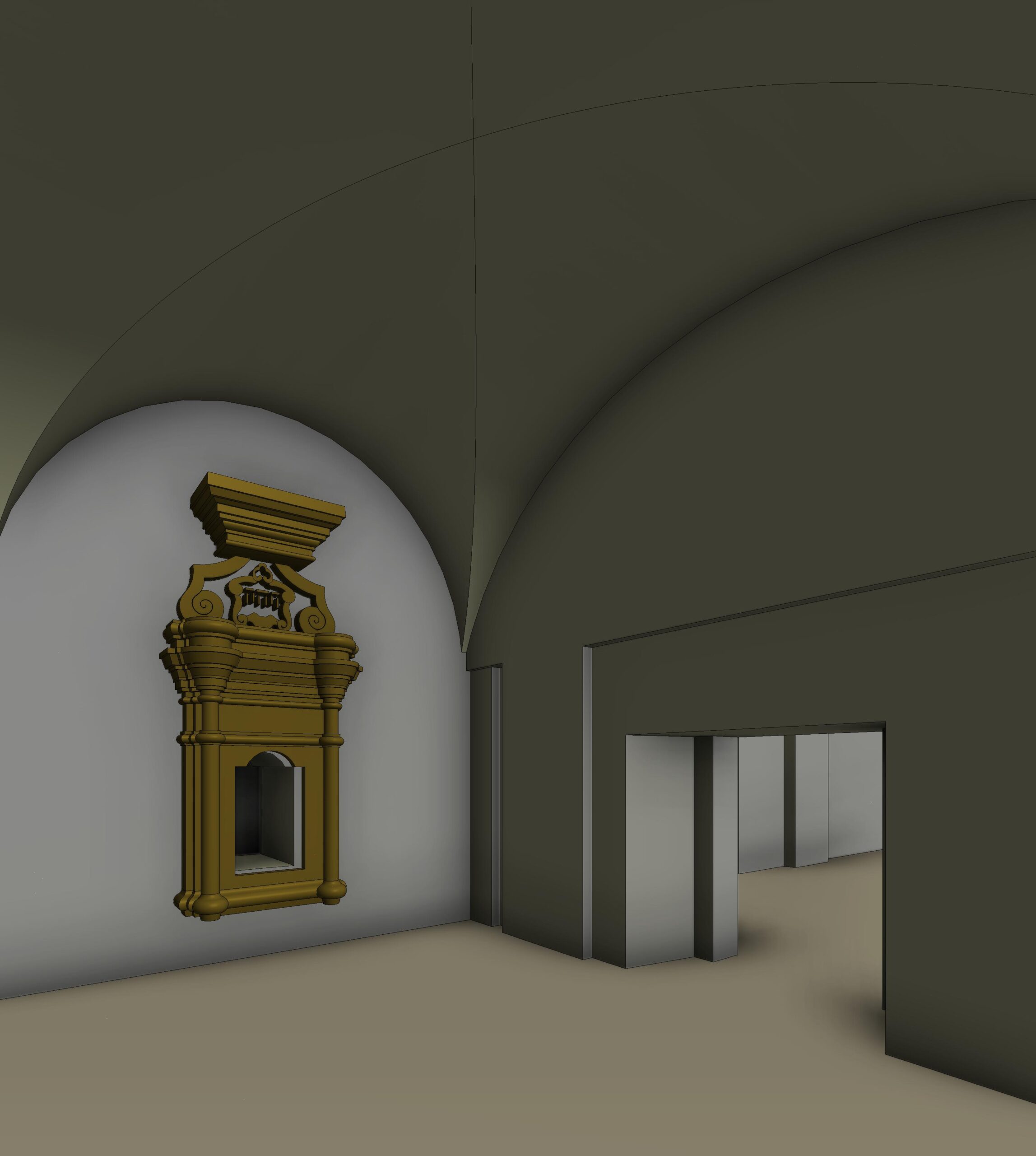
Then
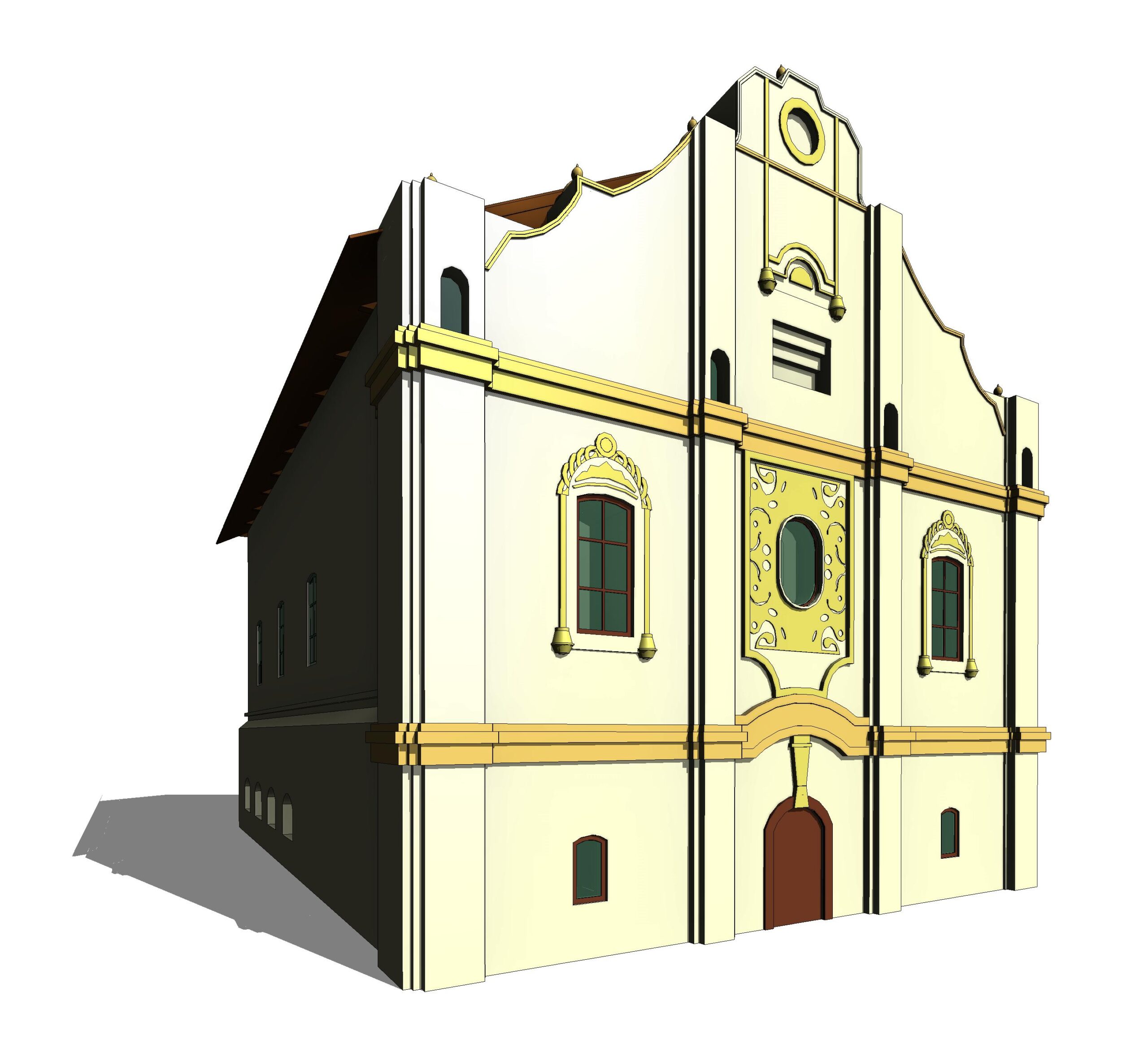
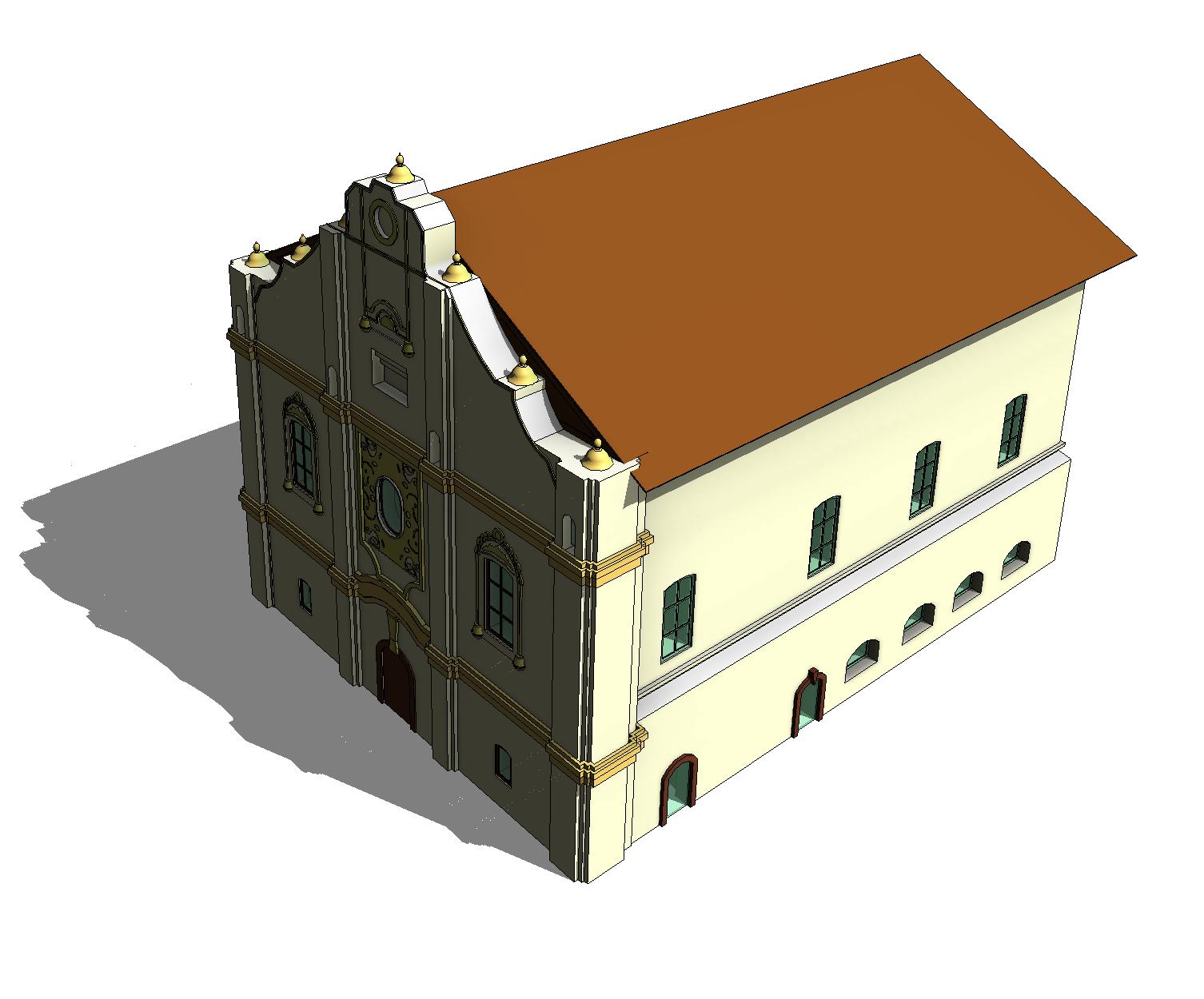
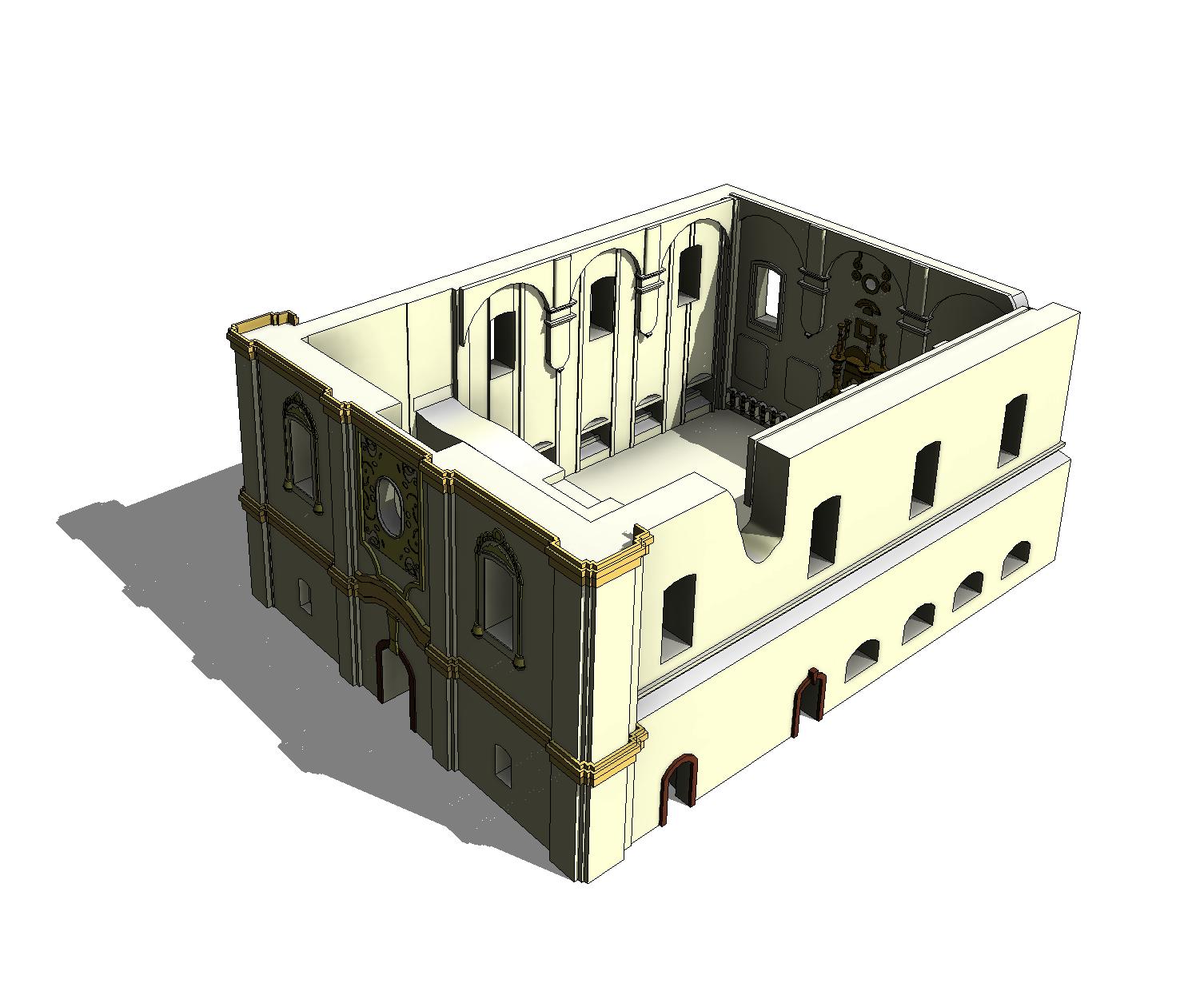
The Great Synagogue is considered one of the 20 most beautiful 18th century synagogues in Europe. It was a masterpiece of regional Baroque synagogue architecture with a monumental stone structure, saddle roof, sculpted gable, and Rococo elements.
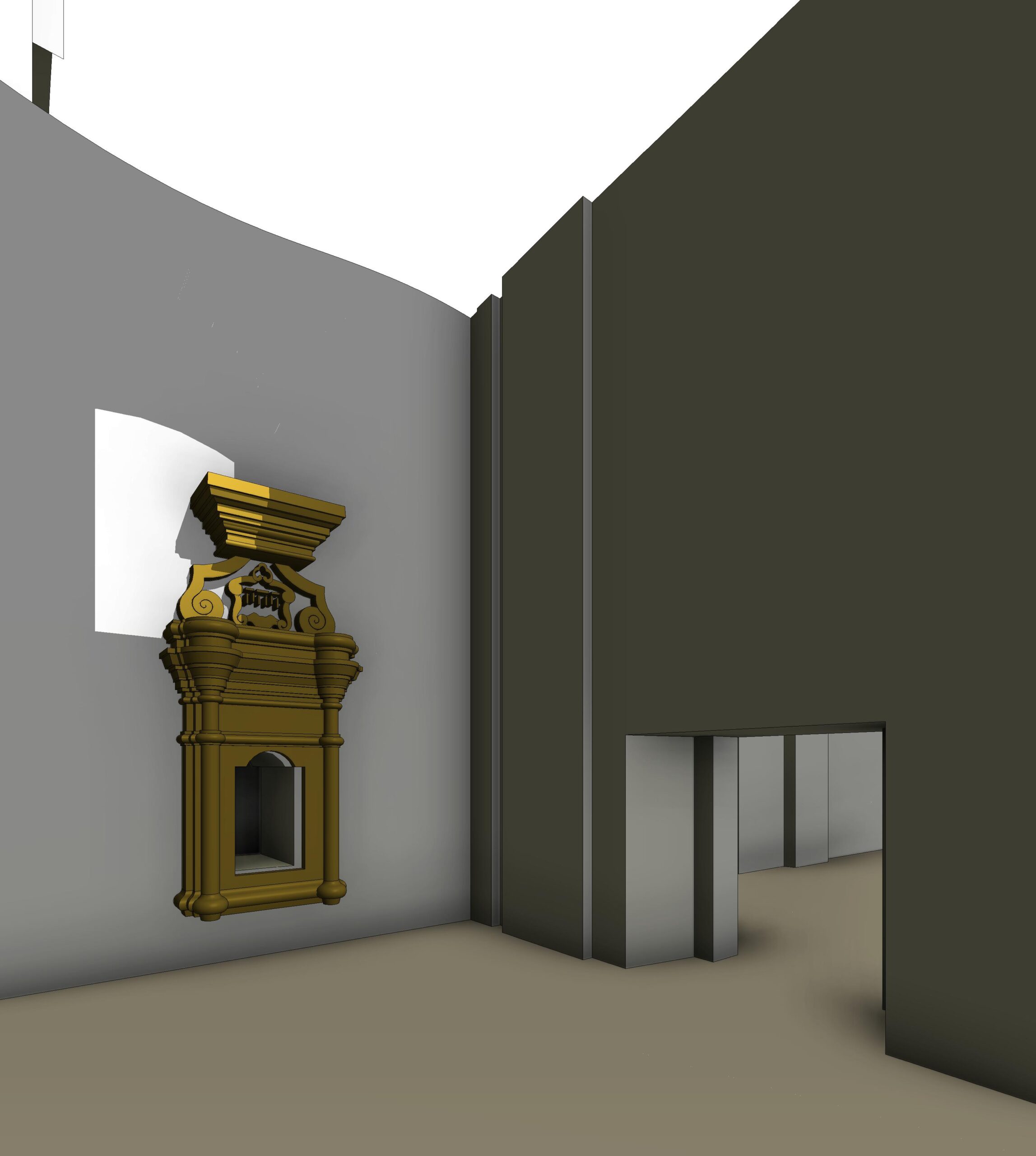
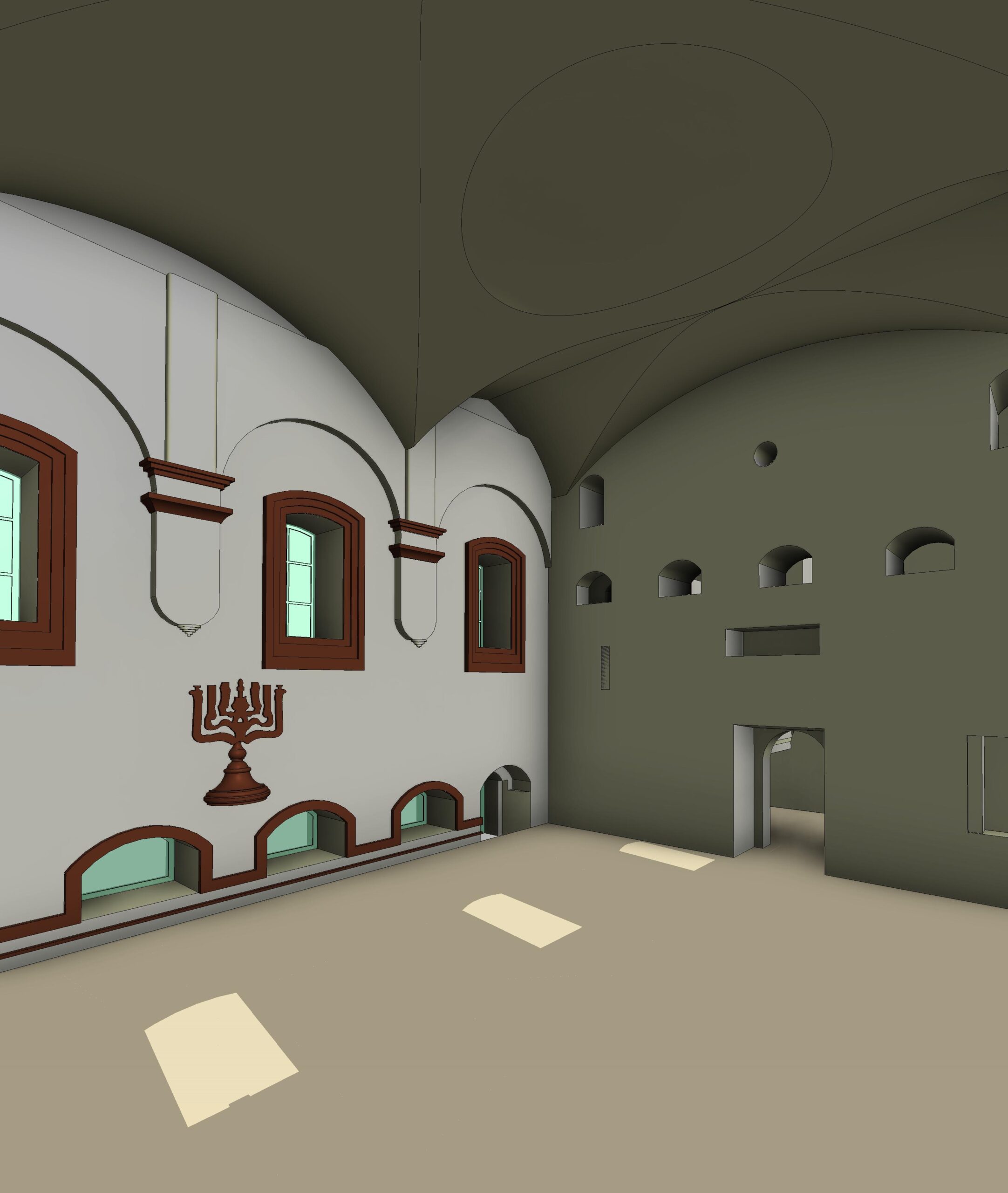
The building was divided into the main hall and a few smaller rooms with walls made of thick stone masonry. It had a large men’s prayer hall organised around four central pillars, forming eight groin‑vaulted bays, a hidden central cupola above the bimah visible only from the interior, stained‑glass windows and painted zodiac signs, birds, and animals. Other spaces were an entrance to the west, a winter synagogue to the north of the vestibule, with its own Torah ark, a council room to the south, a women’s gallery above the entrance, opening toward the main hall, and Staircase inside the western wall leading to the attic.
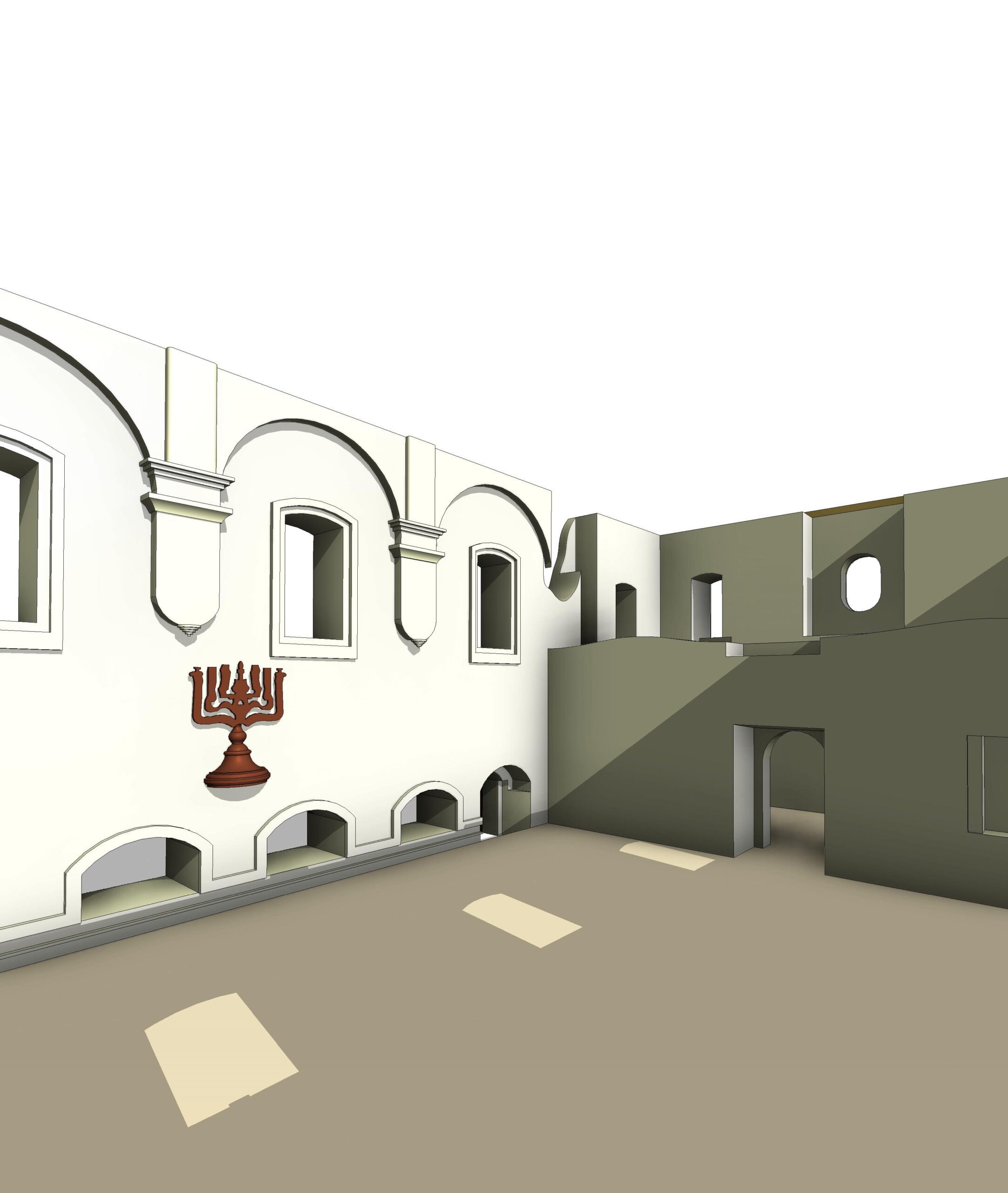
The synagogue’s stone carvings were exceptional a large central cartouche, carved window hoods, a richly decorated Torah ark, and a bas‑relief seven‑branched Menorah on the southern wall of the prayer hall echoing the placement of the Menorah in the Jerusalem Temple. The interior had a separate Torah ark in the winter synagogue, niches for Ner Tamid and other ritual functions, wall paintings. The western façade had richly carved central cartouche, sculpted window hoods and stone frames. Varied façade compositions unified by Baroque rhythm.
According to Jewish Heritage Europe and the Centre for Jewish Art, Rashkov still had a vibrant Jewish population in the early 20th century, with more than 2,000 Jews recorded in 1914, four synagogues, and an active Hasidic presence.
Now
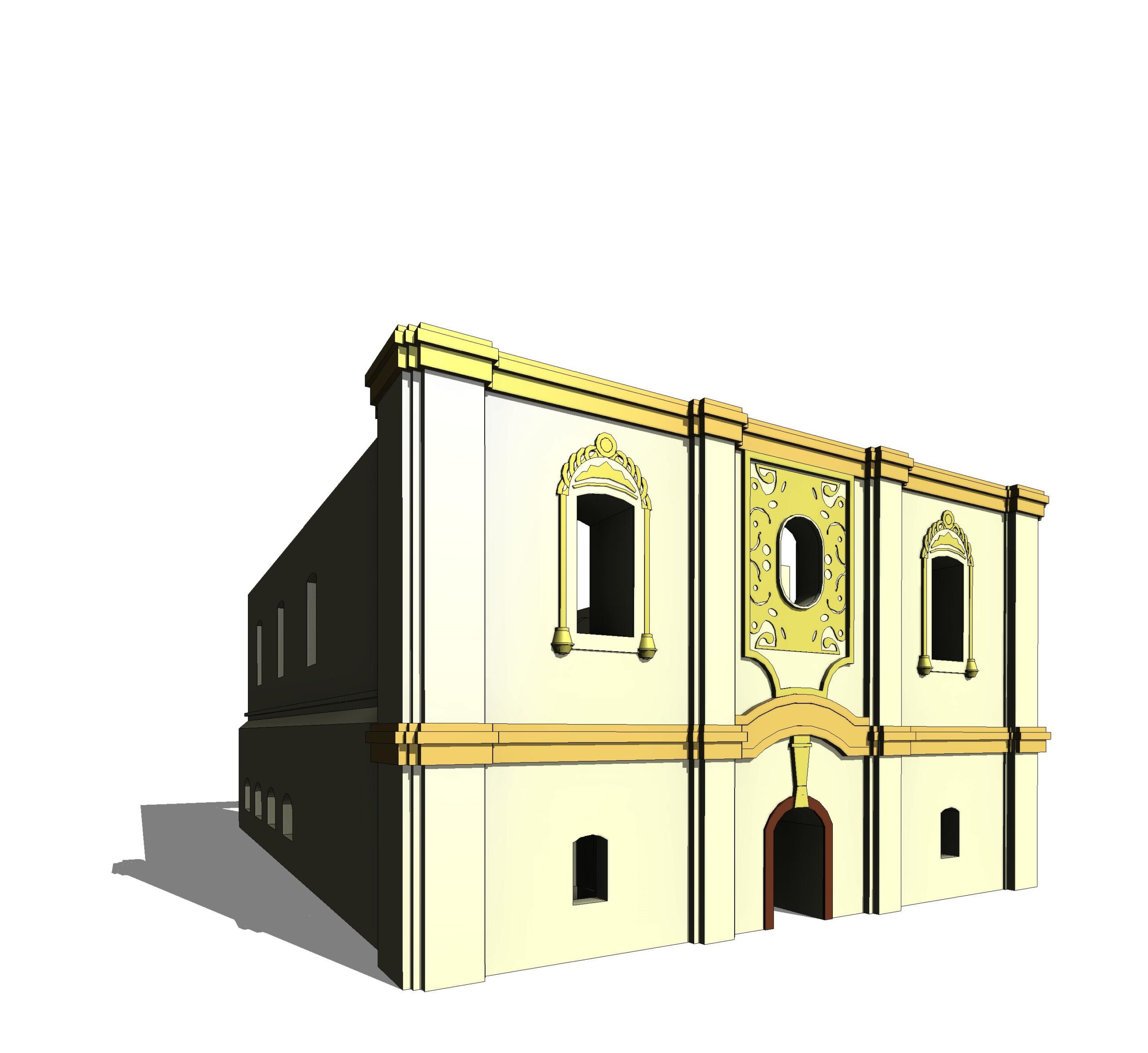
The village of Rashkov and the community faced dramatic changes after the Bolshevik Revolution, followed by the World War II (WWII) and anti-Jewish prejudice. From 1914 onward, the village experienced major demographic and cultural transformations shaped by blanket anti‑religious policies, war-time genocide, and the destruction of its Jewish community. During the 1920s–1930s, authorities of Soviet Union (USSR) implemented strict anti‑religious campaigns against all religions, closed synagogues, and banned communal activity. In the 1930s, they ultimately destroyed the Great Synagogue, including the vault, roof, and upper parts of the walls. The height of the walls remaining is currently reduced to eight meters, and the floor, all the carpentry, and finishing elements, are missing.
Additionally, during WWII, Rashkov fell under Romanian administration as part of Transnistria, where mass deportations, executions, and starvation killed tens of thousands of the community. Although Rashkov itself was not a major extermination site, its Jewish population was almost entirely wiped out or displaced, as documented in regional Holocaust studies and Moldovan Jewish heritage surveys. After WWII, only a handful of Jewish families returned, and by the late Soviet period the Hasidic community had effectively disappeared. At present, Rashkov is a small rural settlement with no population statistics available publicly. However, tracing for functional Jewish community in the village appears to be fruitless as there is no recorded information on official Jewish community platforms or local authorities. Against this context, the synagogue ruins stand as the principal material trace of a historical role undone by war, genocide, and long‑term demographic change.
Since 2016, the attention to the preservation of the building begun with the initiation of a non-profit organisation, Tkumat Rashkov (Rashkov Rebirth) for restoring the property for tourism and pilgrimage. After winning a small EU fund in 2020, the UNDP and Tkumat Rashkov began the first conservation phase in 2021 for clearing vegetation, stabilising walls, and making the site accessible. Although this initial phase was completed in 2022, no further reports on further plans for next phases or new funding are publicly available, implying that the project scope was limited to an initial phase in the conservation. The website of the project is also currently not functioning adding a challenge to gathering related information.
As in August 2026, the synagogue ruins remain as a protected heritage; it is a memorial to a once‑significant Jewish centre.
Project challenges and reflection
The village, Great Synagogue of Rashkov, its Hasidic community and their heritage -both tangible and intangible, faced multiple destructive disasters in sequence: linked with blanket anti-religion repression, anti-Jewish prejudice, and post‑war demographic decline.
The challenge of documentation for digital modelling prevails in this case, for example, the existing photographs, available through the Center for Jewish Art, depict only the ruin. Although the Tkumat Rashkov project produced conservation plans during the 2021–2022 project, these documents relate solely to stabilising the surviving walls and improving site access; they do not illustrate the synagogue’s appearance before its destruction in the 1930s. The absence of measured drawings, cadastral plans, or quality pre‑destruction photographs posed a challenge for precise measuring of the scale and extracting required data for digital modelling, for example for the building’s original dimensions, roof form, or full wall height. In addition, the project website is not reachable anymore (www.tkumatrashkov.org). To address the challenge, the digital modelling process relied on written descriptions and typological analogies with other eighteenth‑century East‑European synagogues. Interior elements such as zodiac paintings, stained glass, and Rococo carvings survive only in textual descriptions and the memories of the prewar gabai’s son Mikhail Voronsky (1914–2014). His memories were recorded in word and drawing by another Rashkov fellow, making any reconstruction of symbolic or decorative programmes inherently speculative.
The project demonstrates the value of absence itself, the gap in the documentation becomes a reminder of the fragility of minority heritage and the limits of historical memory. Ultimately, the digital reconstruction and/or modelling becomes a layered intellectual structure that balances interpretation with restraint, using digital tools not to claim certainty but to visualise what can be responsibly inferred, while maintaining a critical awareness of the epistemological boundaries inherent in modelling.
Tangible and intangible heritage are closely interrelated in Rashkov and the Great Synagogue. The rise and fall of a place central to early Hasidic thought was driven by major ruptures of a community’s spirituality, architectural trends, and modern history. From the development of Jewish mysticism to a communal node with architectural significance, to its later trajectory of Soviet anti‑religious policies that dismantled Jewish communal life and destroyed the synagogue, and the Holocaust in Transnistria, which resulted in the near‑total disappearance of the Jewish population.
The case also highlights the importance of heritage advocacy to identify, initiate and campaign for protecting meaningful nodes of a community’s heritage before it is lost forever. Although the conservation of this Great Synagogue appears no to move forward as expected, but taking the initiative by a non-profit organisation paved the way to protect this heritage at least for a foreseeable future.
References
- Shuchat, Raphael. 2025. ‘Hasidism: Its Thought and Theology’, St Andrews Encyclopaedia of
Theology. Edited by Brendan N. Wolfe et al. https://www.saet.ac.uk/Judaism/Hasidism - Kogan, Yefilm. (March 27, 2016, Phase 2 – February 28, 2018), he Jewish Cemetery of Raskov
(Rashkov). Available online:
https://www.jewishgen.org/Bessarabia/files/cemetery/rashkov/RashkovCemetery.pdf - Weingerger, Teddy. Apr 20, 2017, Tkumat Rashkove project works to restore, preserve Jewish
history, Hweish Herald-Voice, available online:
https://jhvonline.com/tkumat-rashkov-project-works-to-restore-preserve-jewish-historyp22630-157.htm - Jewish Heritage Europe. (2021, August 9). Moldova/Transnistria: Priority first stage
preservation work begins on ruined 18th‑century synagogue in Raşcov. Jewish Heritage
Europe. https://jewish-heritage-europe.eu/2021/08/09/moldova-transnistria-rashkov/ - Jewish Heritage Europe. (2017, February 26). Will (or can) the great synagogue in Raşcov be
conserved? Jewish Heritage Europe https://jewish-heritage-europe.eu/2017/02/26/will-orcan-the-great-synagogue-in-rascov-be-conserved/ - Center for Jewish Art. (n.d.). Search the database. Hebrew University of Jerusalem. https://cja.huji.ac.il/search.php
Center for Jewish Art. (n.d.). Great Synagogue of Rashkov (Object ID 10802). Hebrew University of Jerusalem. https://cja.huji.ac.il/browser.php?mode=set&id=10802 - Goldshmidt, E., Teper, I., & Finckel, M. (2007). History in stone: Monuments of the Jewish material culture in Moldova (XVII–XXI centuries) (pp. 75–76, 91). Cartdidact.
- Kravtsov. S., Levin. V., 2017, Great Synagogue in Rashkov, Moldova, The Bezalel Narkiss Index of Jewish Art and Material Culture, The Center for Jewish Art. Available online: Center for Jewish Art Last Accessed 24-07-2026Jewish Heritage Europe. (2017, February 26). Will (or can) the great synagogue in Raşcov be conserved? https://jewish-heritage-europe.eu/2017/02/26/will-or-can-the-great-synagogue-in-rascov-be-conserved/
- Moldova Update: UN and EU supported conservation work on the monumental ruins of the 18th century synagogue in Rașcov has been completed, 2022, Jewish Heritage Europe, Availabe online: Moldova Update: UN and EU supported conservation work on the monumental ruins of the 18th century synagogue in Rașcov has been completed – Jewish Heritage Europe Last Accessed 24-07-2026
- Moldova/Transnistria Update: The preserved ruins of the 18th century synagogue in Raşcov (Rashkov) is a tourist attraction — watch a video, 2025, Jewish Heritage Europe, Availabe online: Moldova/Transnistria Update: The preserved ruins of the 18th century synagogue in Raşcov (Rashkov) is a tourist attraction – watch a video – Jewish Heritage Europe Last Accessed 24-07-2026
- United States Holocaust Memorial Museum. (n.d.). Holocaust in Transnistria. Transnistria Governorate | Holocaust Encyclopedia
The images and architectural modelling shown here are for illustration purposes only and may not be an exact representation of the property. Silk Cities is not liable for subsequent updates, errors, or omissions of data or any updates on the conservation of the property afterwards.