

Zamek w Besiekierach
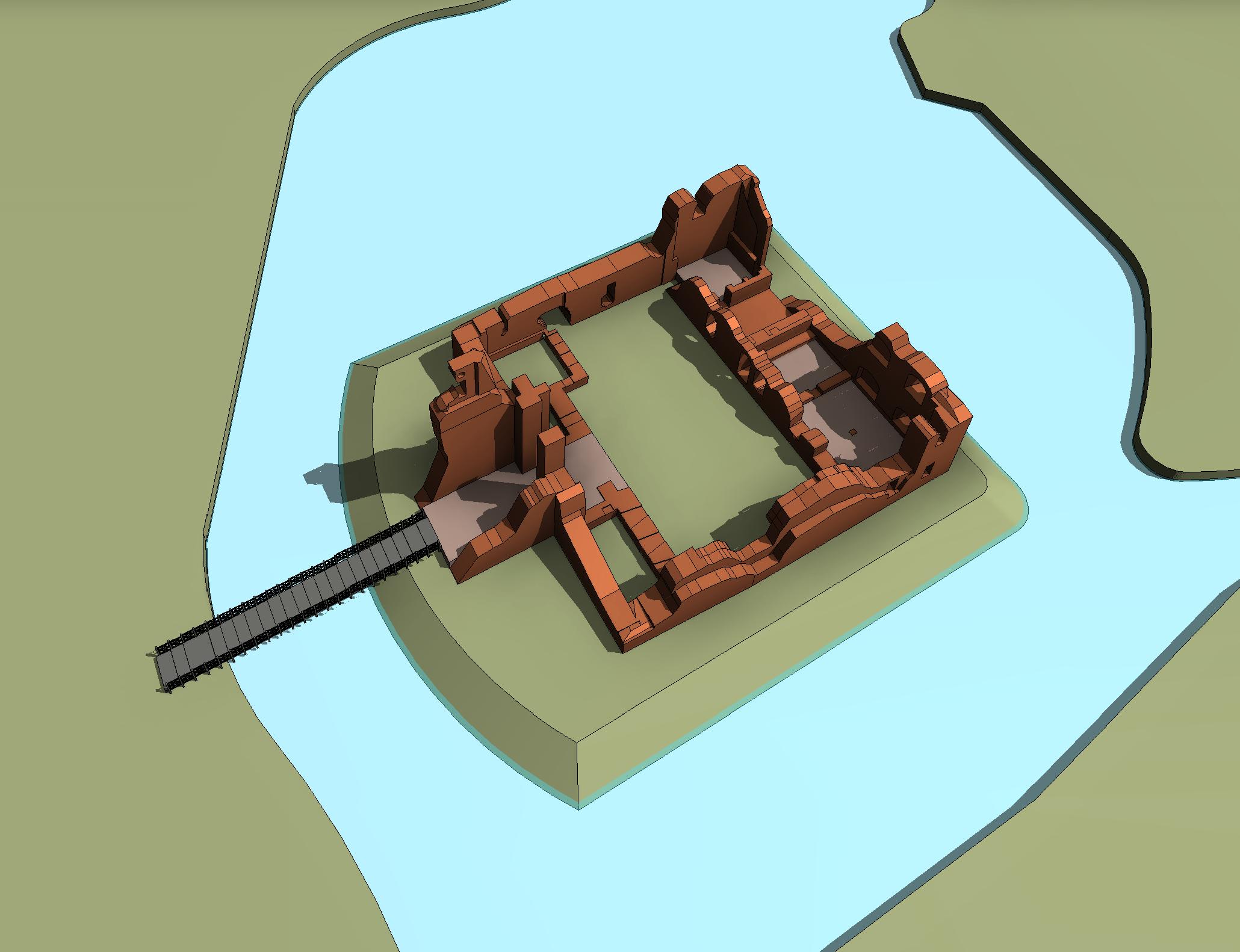
Besiekiery Castle was one of the largest and most important defensive structures located in the former Łęczyca Voivodeship. It was built during the 15th century in the village of Besiekiery, located on the southern side of the swampy valley, on an island formed in the middle of an artificial lake. This island, which is a natural elevation, had a rectangular shape with rounded corners and dimensions of 60 x 55 metres. At the southern shore and in the central part it was 6 metres high above the water level, while its banks formed a clear slope rising 3.5 metres above the lake level, although originally the water level was higher. At the same time, the island was clearly below the hills surrounding the lake from the south and east. The historical name ‘Besiekiery’ is believed to be driven from the Norse (the language of ancient or mediaeval Scandinavia, modern-day Norway, Sweden, and Denmark) word ‘Besekr’, meaning a man in a bear’s skin. This suggests that Vikings were stationed here in the early Middle Ages, a fact confirmed by the discovery of a mass grave of Scandinavian warriors in nearby Lutomiersk.
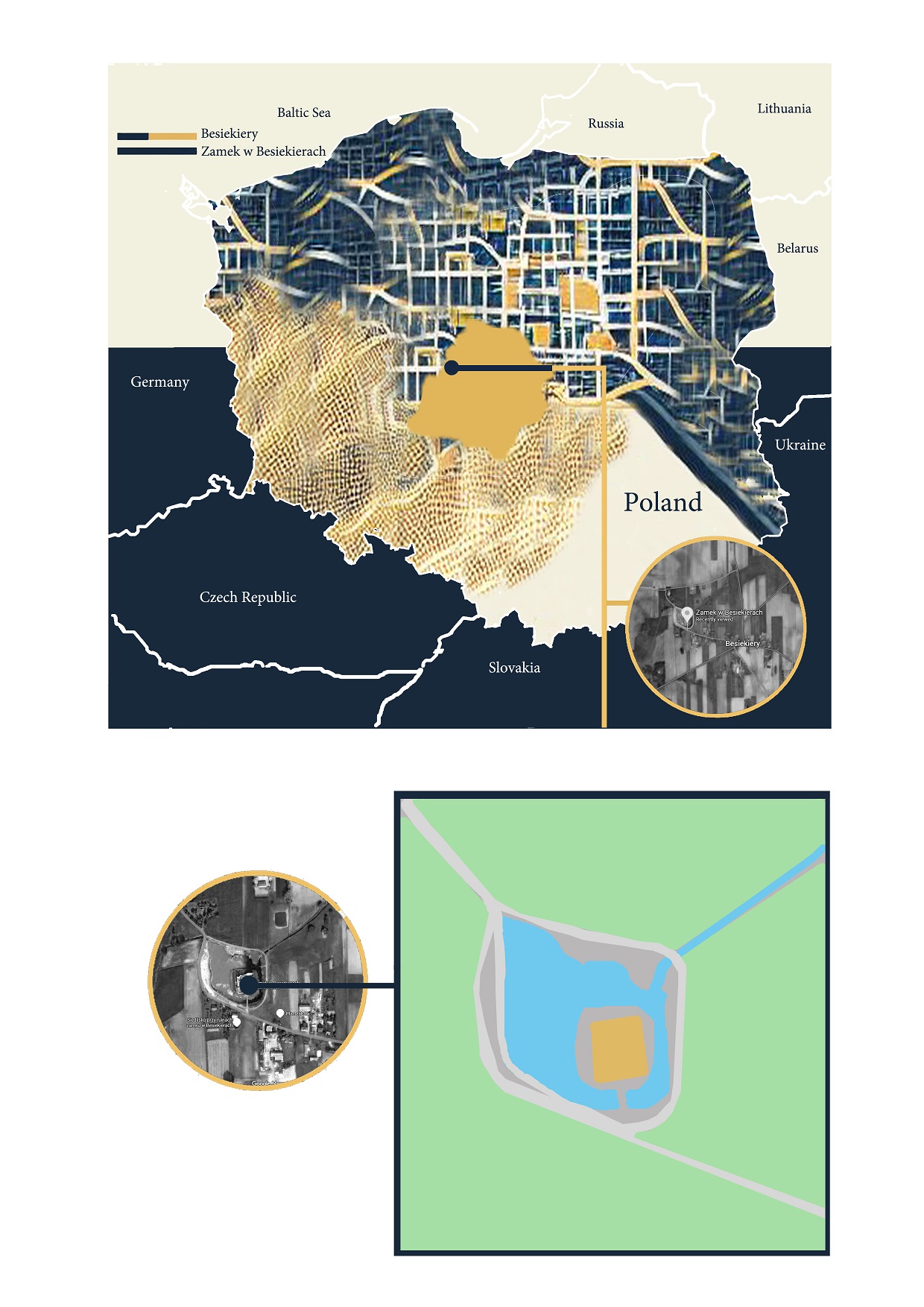
Site Location
There are old local legends associated with this castle. One legend is about the origin of the castle. It tells the story of a knight who bet the devil Boruta from nearby Łęczyca that he could build a castle from scratch without using an axe. He did so, however, he was unaware that one of the workers working for him was called ‘Siekierka’, meaning ‘axe’. As a result, the knight lost the bet which meant losing both his soul and the castle. Another old legend is about the White Lady, who, although permanently residing in nearby Borysławice Zamkowe, appears in Besiekiery before various important events. Her shadow can then be observed in the empty window socket of the gate tower, from where it flows down and wanders along the remains of the castle walls, disappearing as suddenly as it appeared. As the legend says, the White Lady is the ghost of the Szczawiński family’s daughter, who refused to marry her parents’ chosen suitor, as she had given her heart to another. As punishment, she was transported to the castle and imprisoned in the gate tower. An attempt to escape through the window using a rope ended tragically for the young lady, and ever since, her apparition has been wandering, waiting for her saviour.
The castle played an important role in defending the region during the late Gothic period, serving as both a residence for local nobility and a military stronghold. The castle was built as a knight’s residence by Mikołaj Sokołowski around 1560, during his term as Voivode of Łęczyca. In 1597, the Sokołowski family’s building became the property of Cardinal Andrzej Batory, Bishop of Warmia, and then of Zofia Batorówna and Jerzy Rakoczy. Around the mid-17th century, the castle was purchased by Jan Szymon Szczawiński, Voivode of Brzesko and Starost of Łęczyca. The castle’s defensive qualities were enhanced by the immediate proximity of water filling the moat that surrounded the building’s walls.
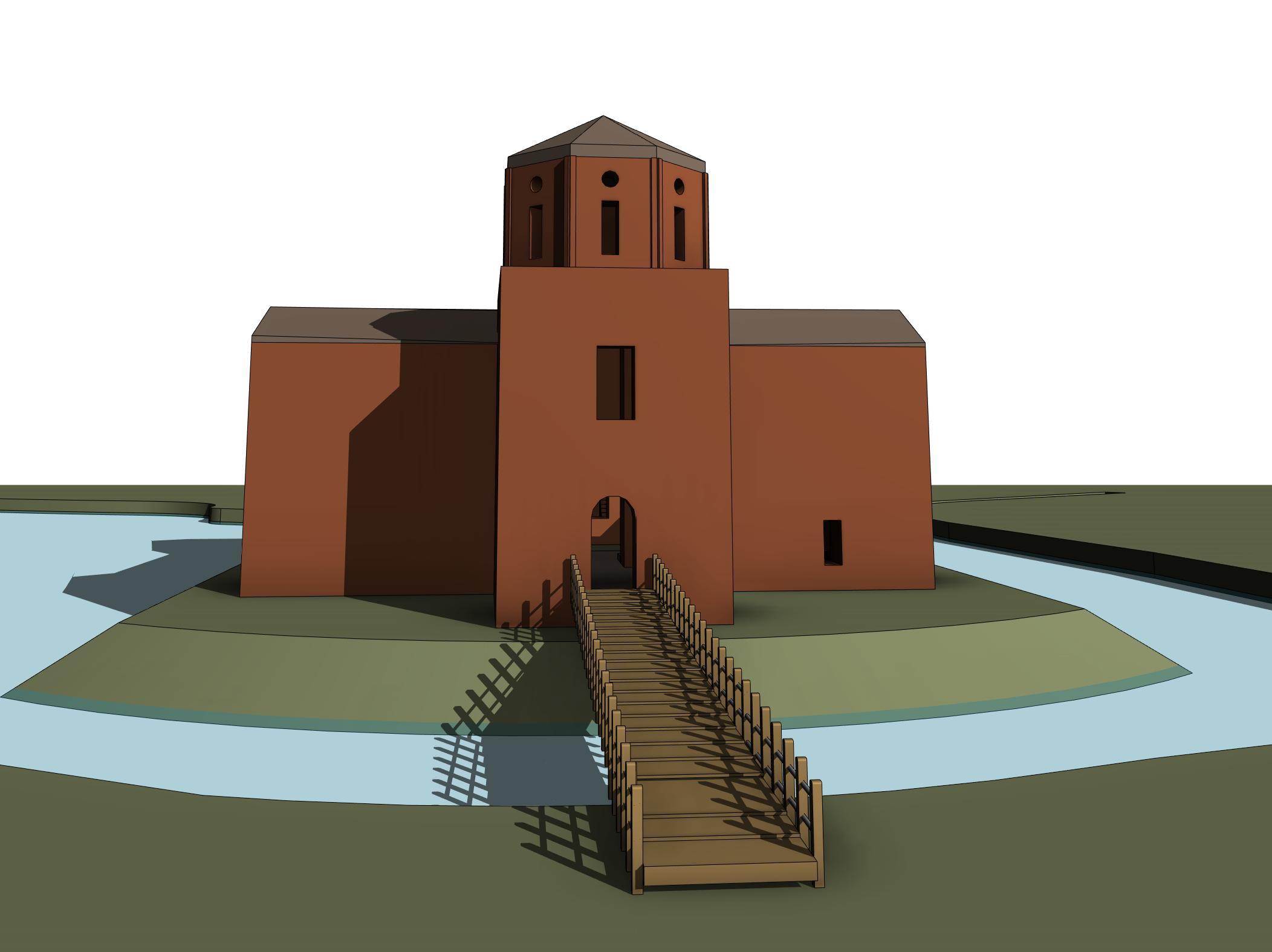
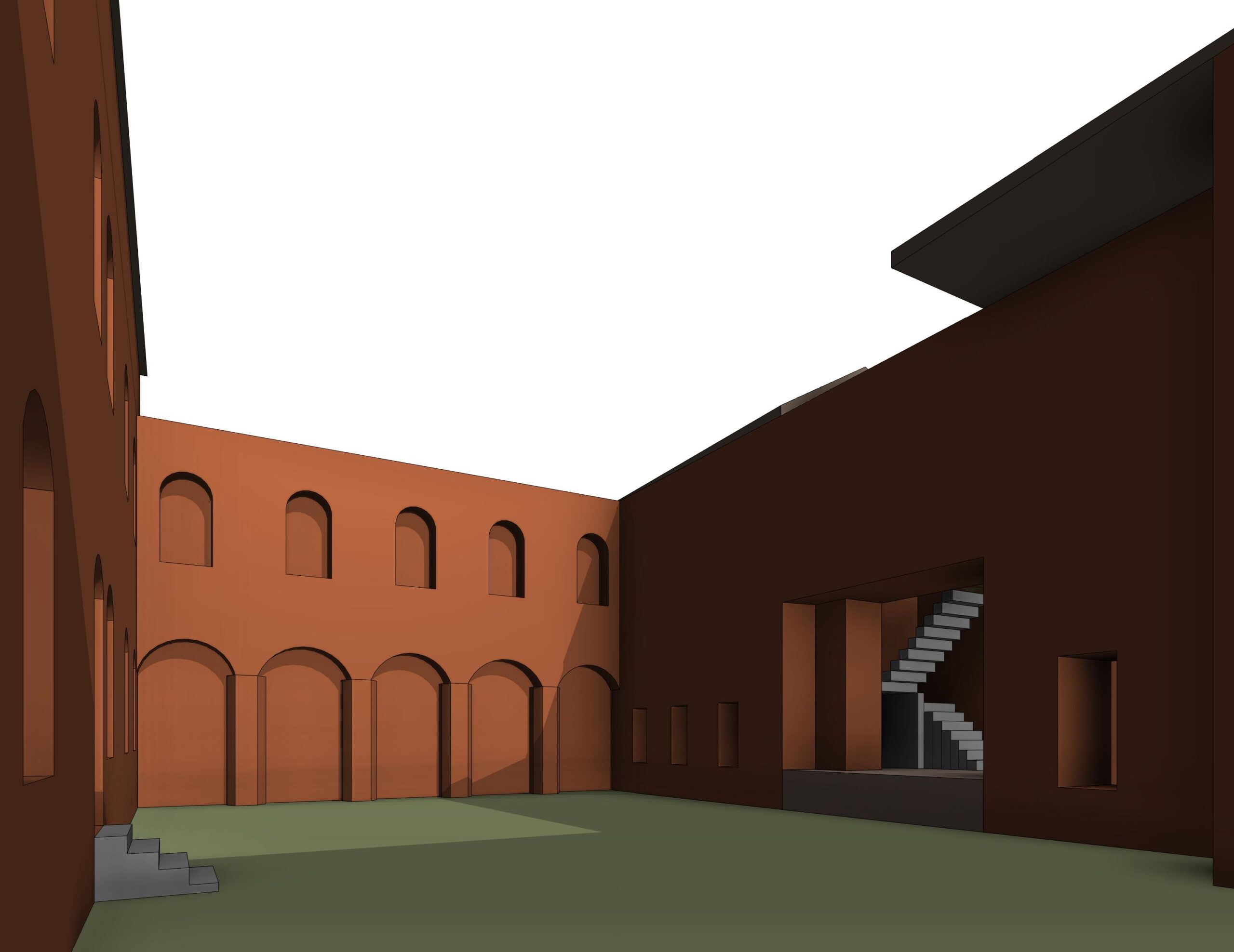
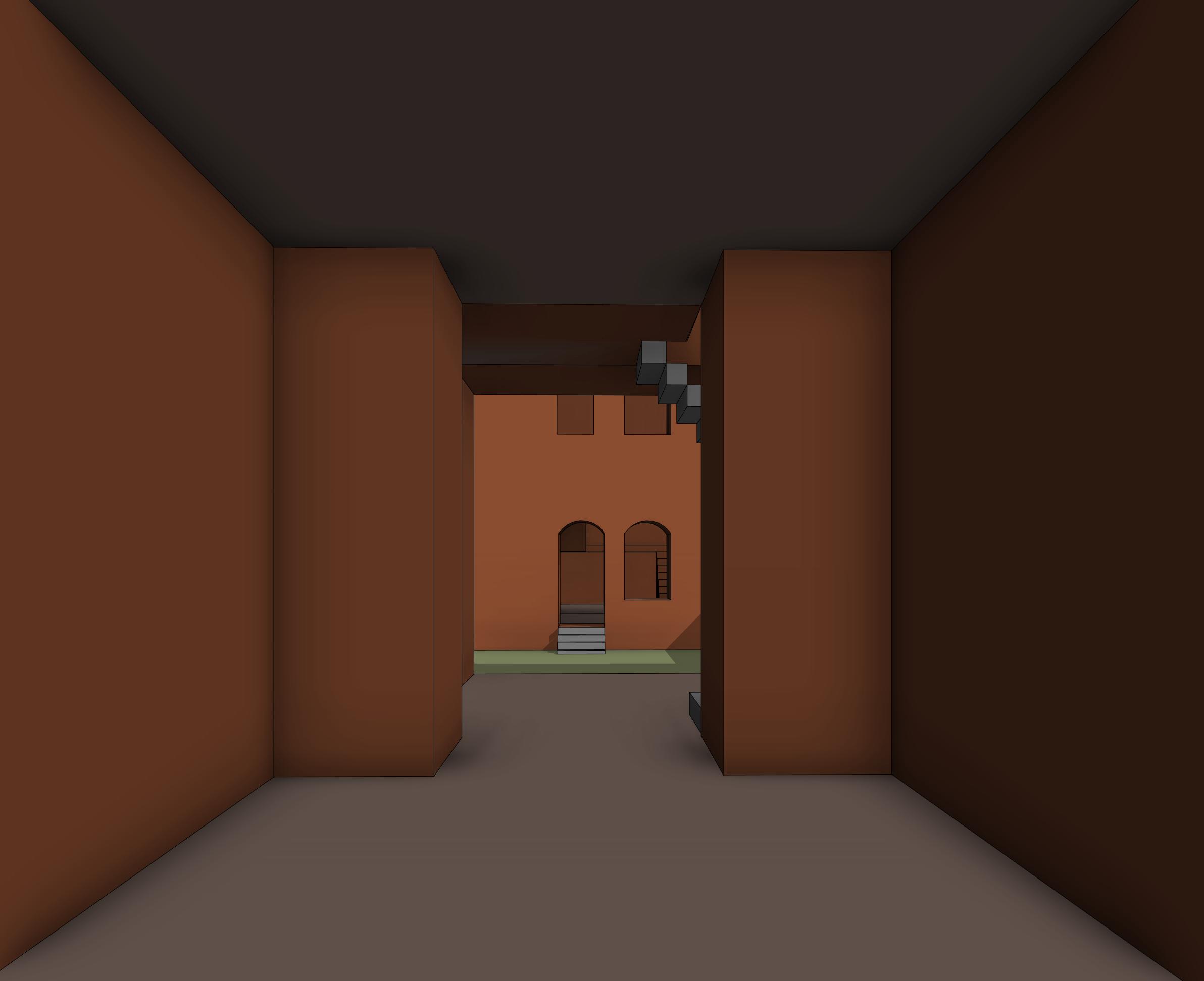
Then
The late Gothic architecture of the castle consisted of defensive walls 2 metres thick around the courtyard, as well as a house and gate tower, built of bricks on a stone foundation. The castle’s square was 38×40 metres in size. Originally, its perimeter walls were right next to the water, whose level only decreased after some time. the defensive walls were crowned with a 0.8-metre-wide wall-walk for defenders, which was located at a height of about 3.9 metres, while the total height of the defensive walls was estimated from the remains to be around 6 metres, with no exact figure of the exact hight. A wall-walk is a passage along the top of a defensive wall, allowing defenders to patrol and protect the structure. It is not certain how the defensive walls were originally crowned, but the presence of a screen wall from the courtyard side, a non‑load‑bearing internal wall, usually placed inside a great hall or chapel of a castle, used to separate the entrance area from the main ceremonial space while remaining visually permeable through arches or tracery. It functioned as both a spatial divider and a decorative architectural element, suggests that the entire wall was covered with a roofed porch, which would be confirmed by finds of mediaeval tiles in its vicinity. The walled courtyard was approximately 23.5 x 33 metres.
In 1655, the building went through renovation and reconstruction by Starost Jan Szymon Szczawiński. Information about this reconstruction appeared in two foundation plaques – one embedded in the gate tower, funded in 1653 by Jan Szymon Szczawiński, and the other placed on the façade of the castle house. The seventeenth-century reconstruction of the castle erased the earlier austerity of the late Gothic. The exterior of the wall was faced with brick, with the lower sections of the core filled with brick arranged perpendicular to the wall, and the upper sections with fieldstone, levelled with brick and stone rubble.
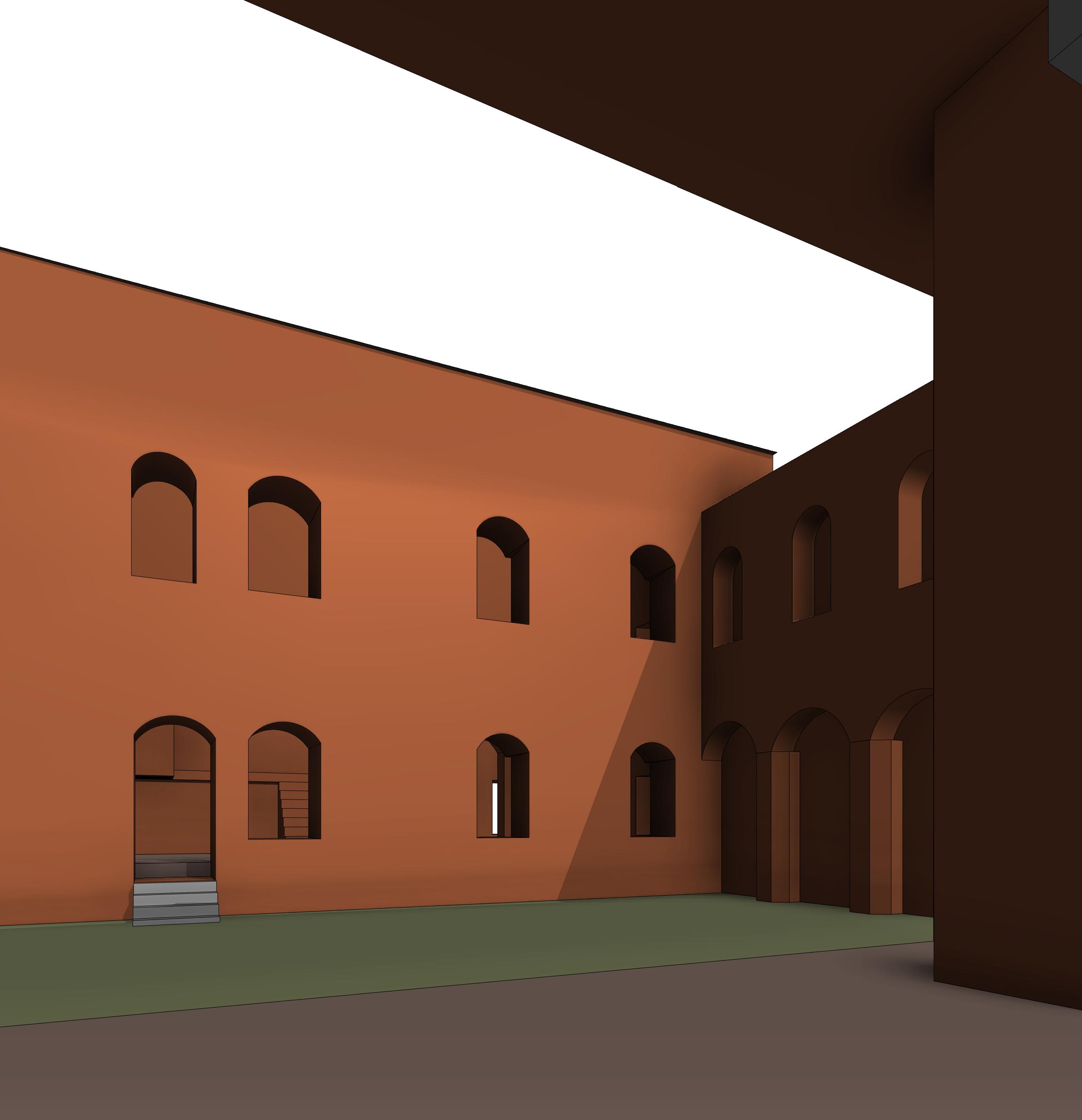
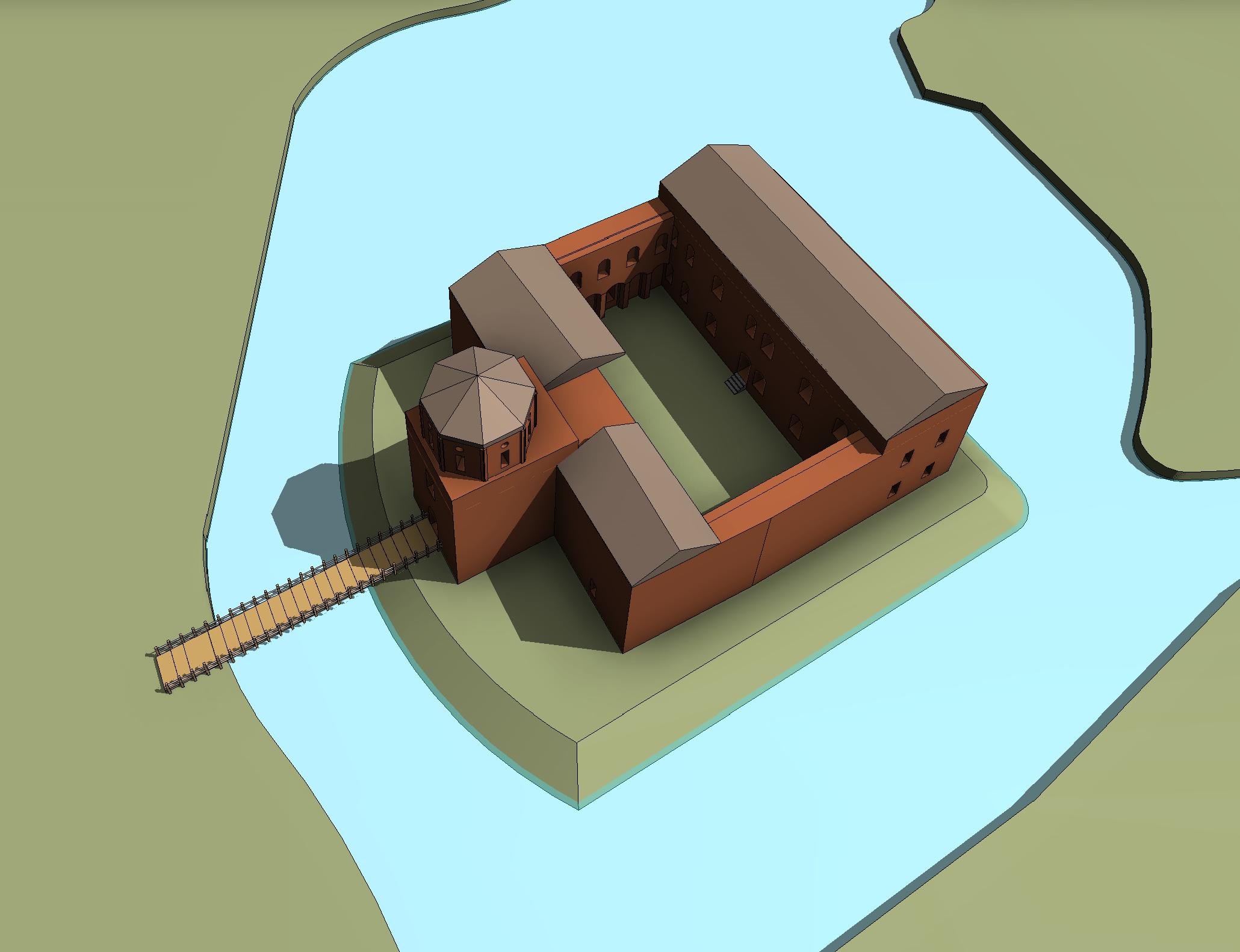
The reconstruction led to architectural and functional transformation, and the castle became a residence, with an arcaded courtyard and living quarters. During this reconstruction, the building’s walls were likely backfilled, creating an island covered with lime plaster. It was probably only then that the upper, octagonal part of the gatehouse was constructed. The reconstruction resulted in a residential structure consisting of a plastered castle house and a courtyard, with two-storey arcades (imitating the Renaissance courtyards of palaces in southern Poland) added to the western and eastern walls, allowing connection above the courtyard level between the first floor of the large house and the chapel located in the gatehouse; and a plastered gatehouse tower. Next to the tower, two low buildings were added, probably a stable and a coach house.
The tower and gate passage had four storeys: the two lower ones were square in shape, while the two higher ones were octagonal. The lower floors had a smooth outer wall, with two window openings in the upper story. The gateway’s opening was likely 2.4 metres in height and 3.0 metres wide, with the facing preserved directly at ground level. Structurally, the tower walls were similar to the castle walls: the squared ground floor was made of brick, with a core of layered fieldstone in lime-sand mortar above, while the octagon-shaped higher floors were fully made of brick. The entire structure, both externally and internally, was faced with brick.
In the large Northen house, the vaulted halls were replaced with wooden ceilings, and the window openings were widened. The western chamber was probably heated by a furnace located in the basement, as evidenced by the channels draining warm air placed in the walls. Similar channels were found in the north wall between the two rooms in the east. Connection between the floors was through stairs in one of the central rooms and a passage on the second floor in the southeast corner leading to the wall walk in the crown of the defensive wall. The northwest corner had stairs believed to be leading to a basement. After this Baroque transformation, no further major construction work was carried out at the castle.
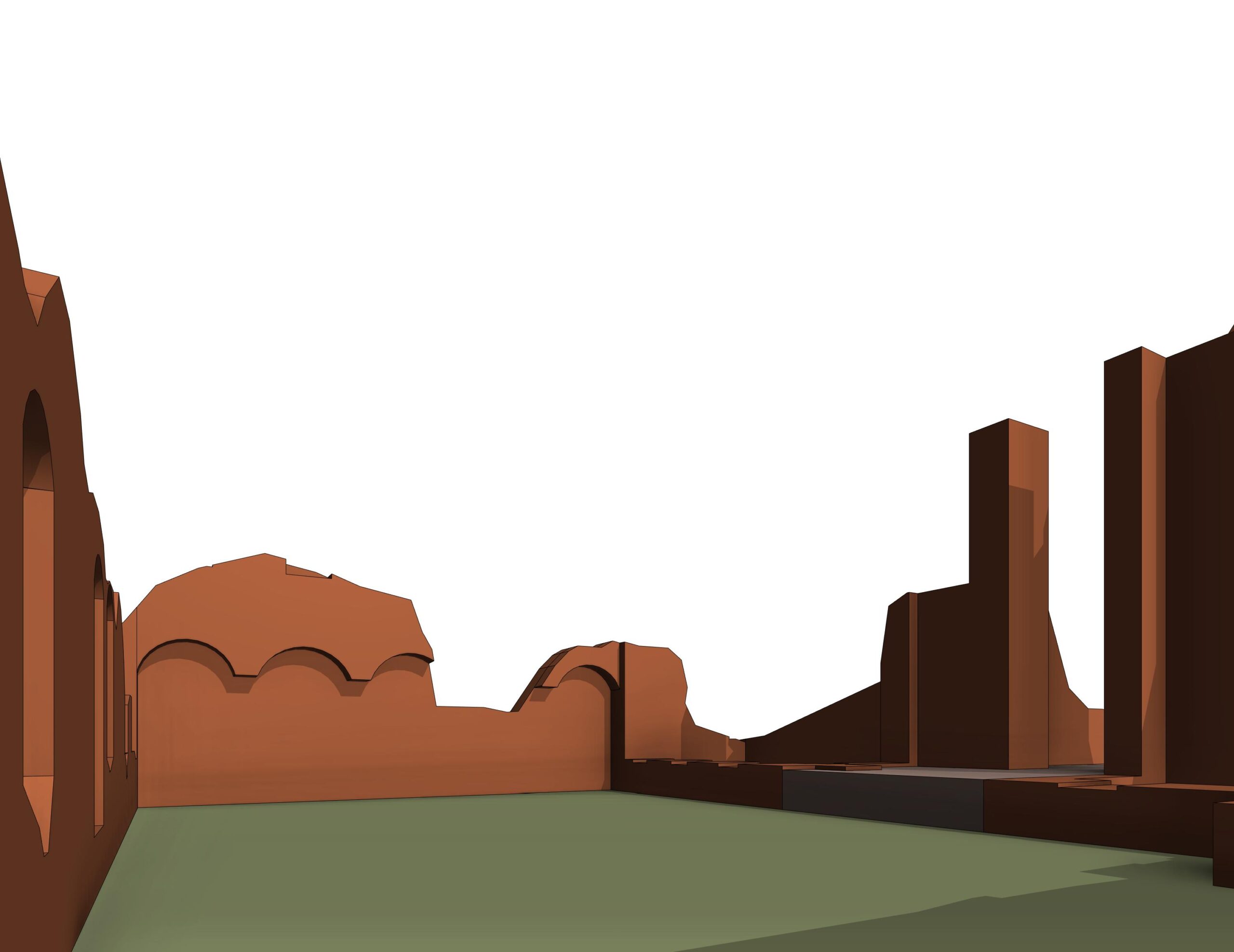
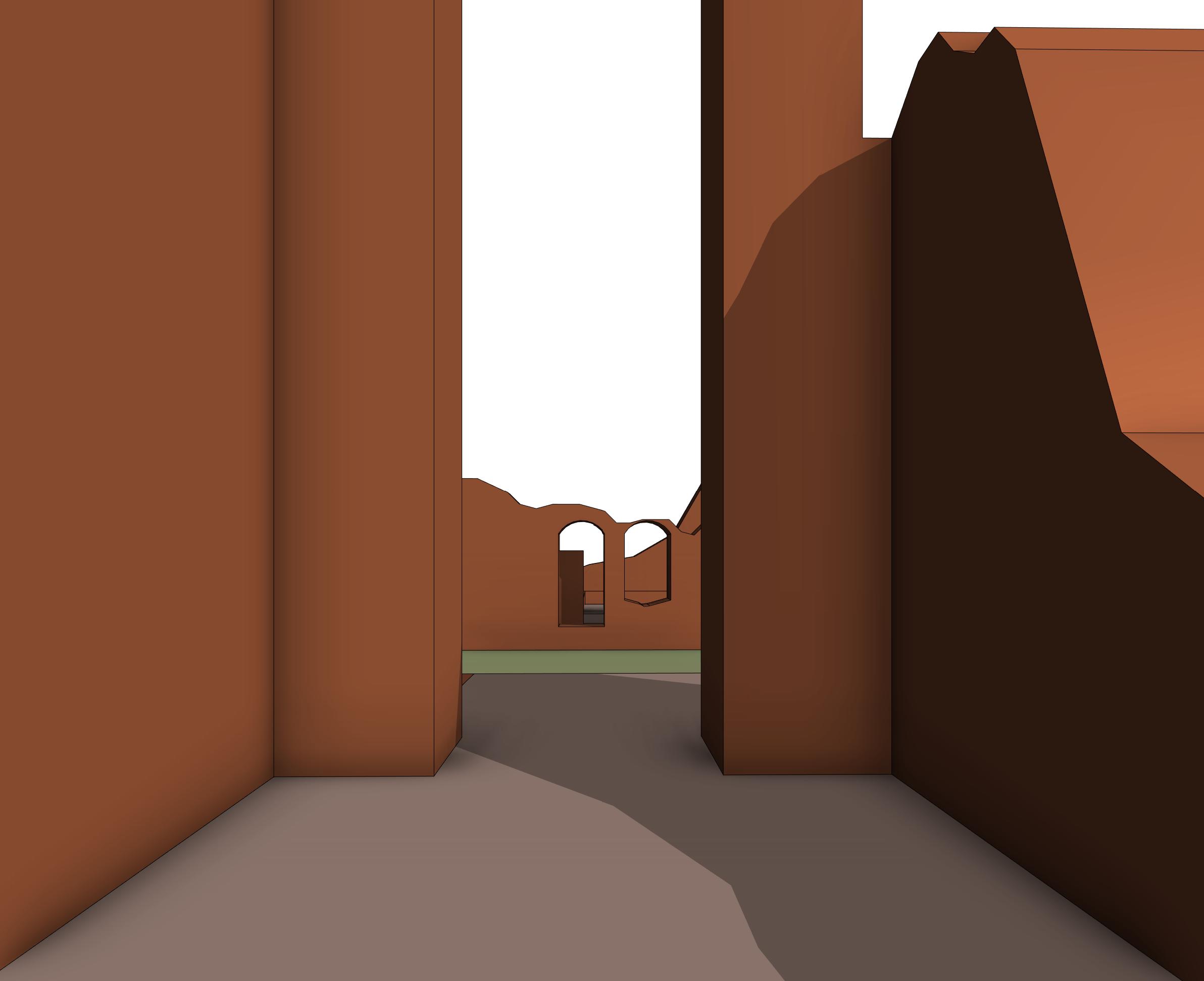
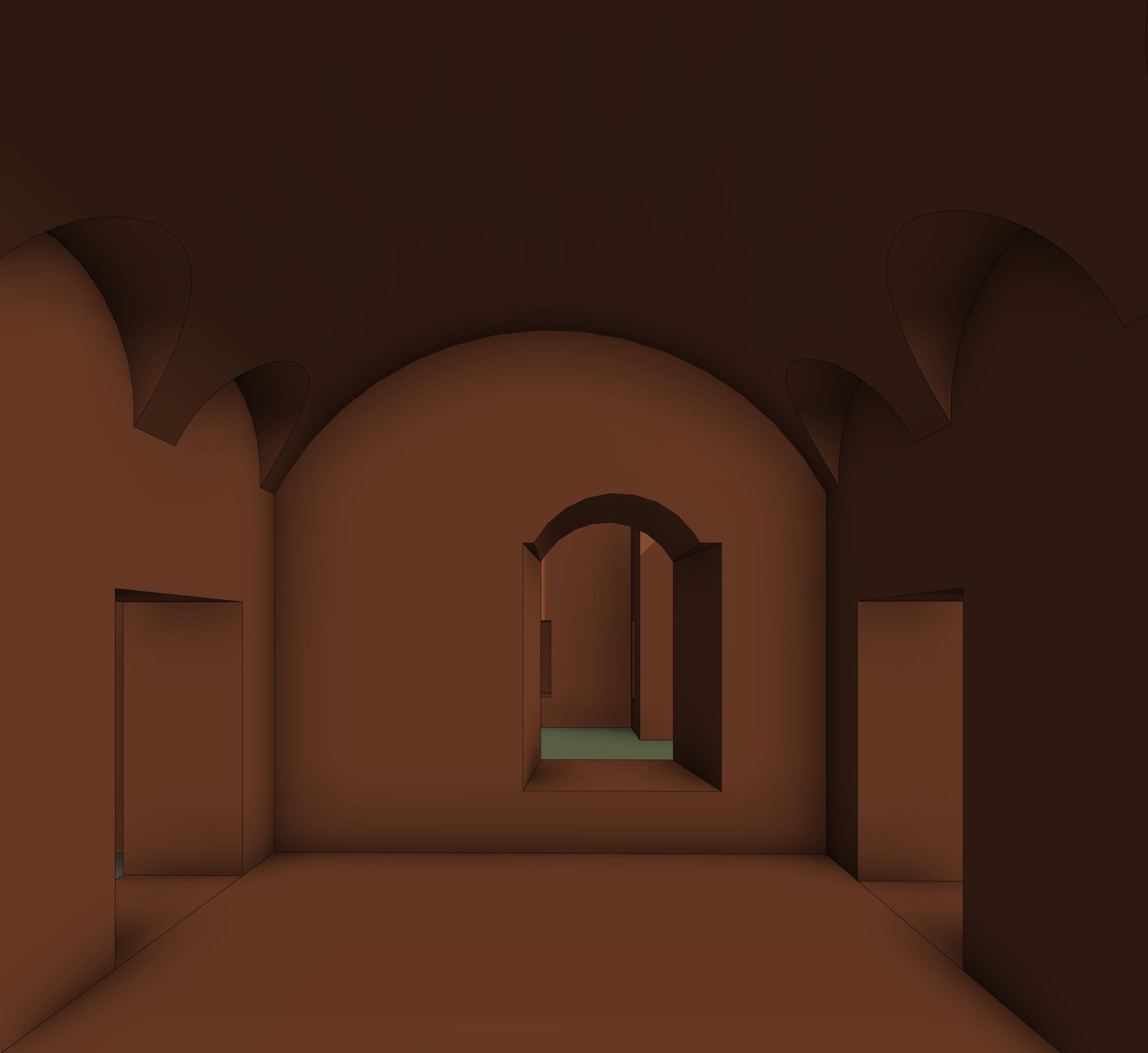
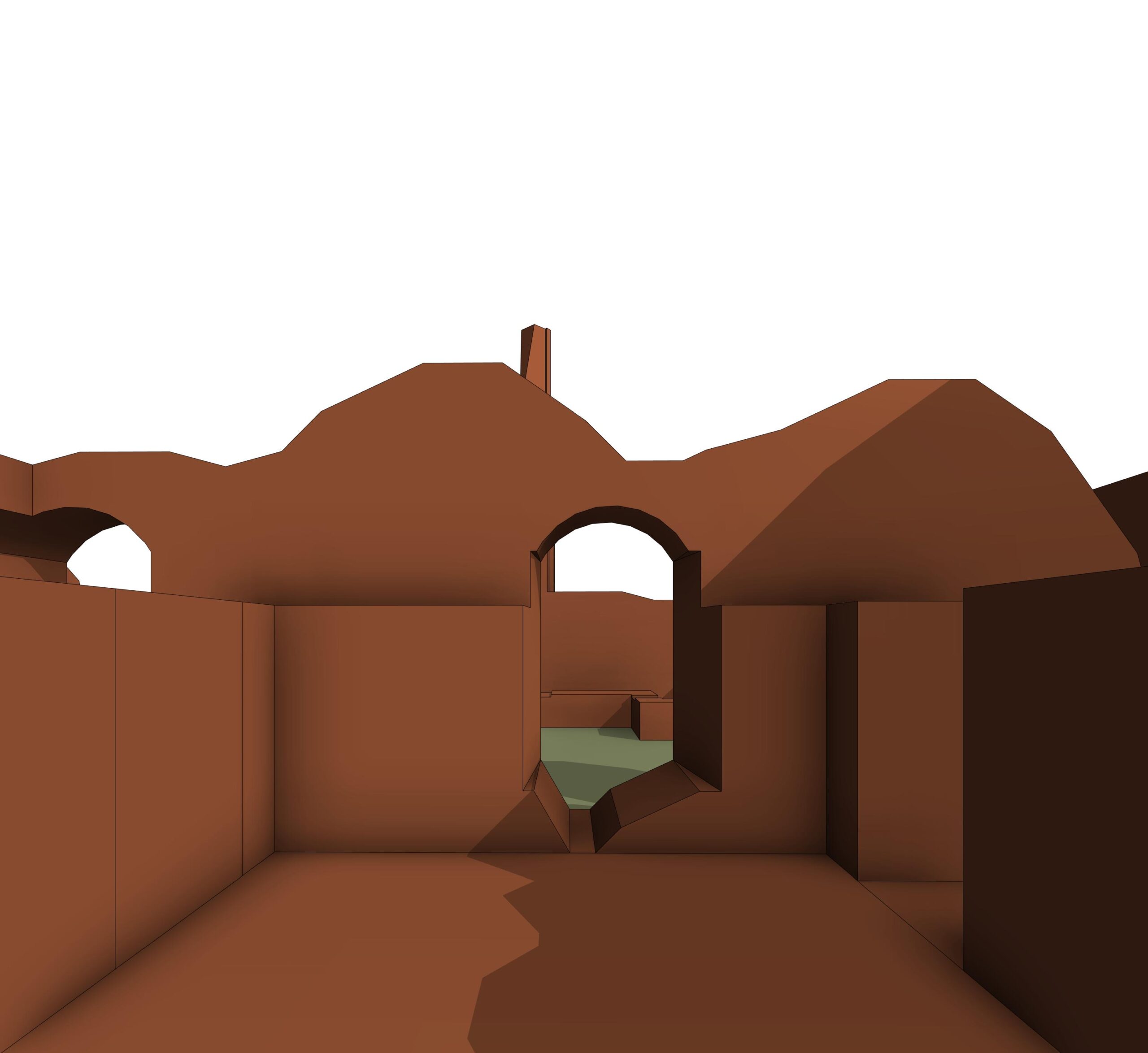
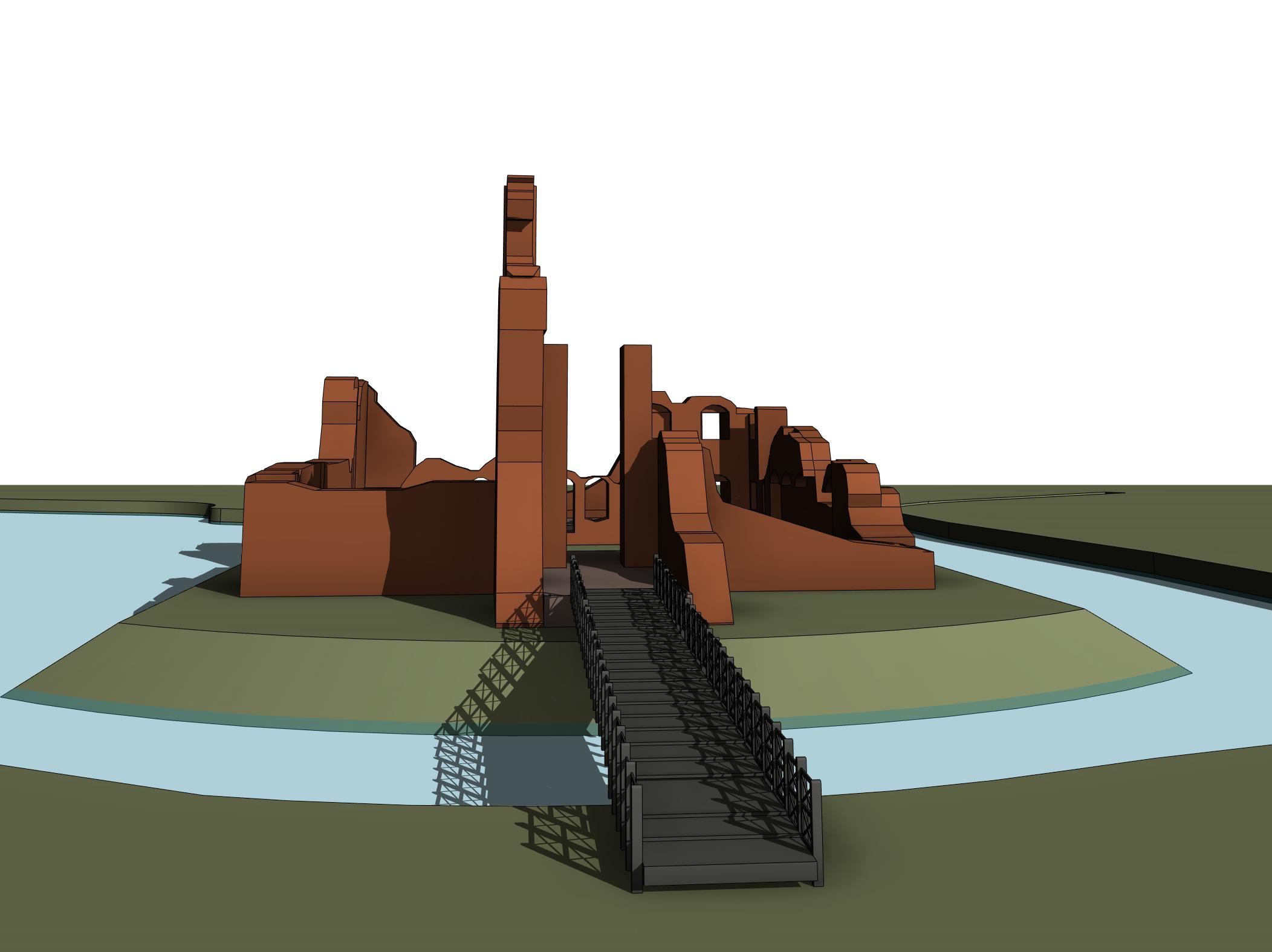
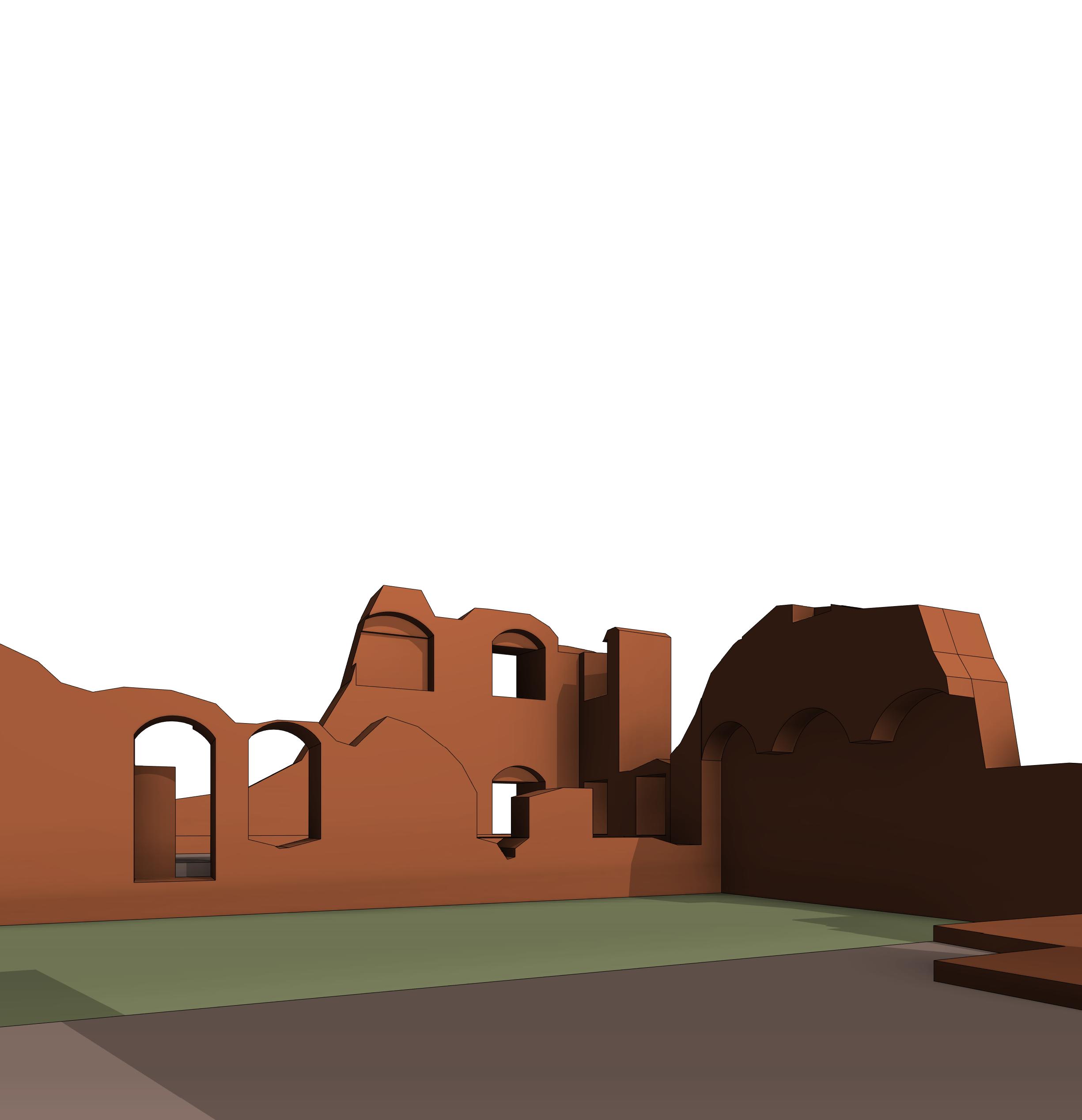
Now
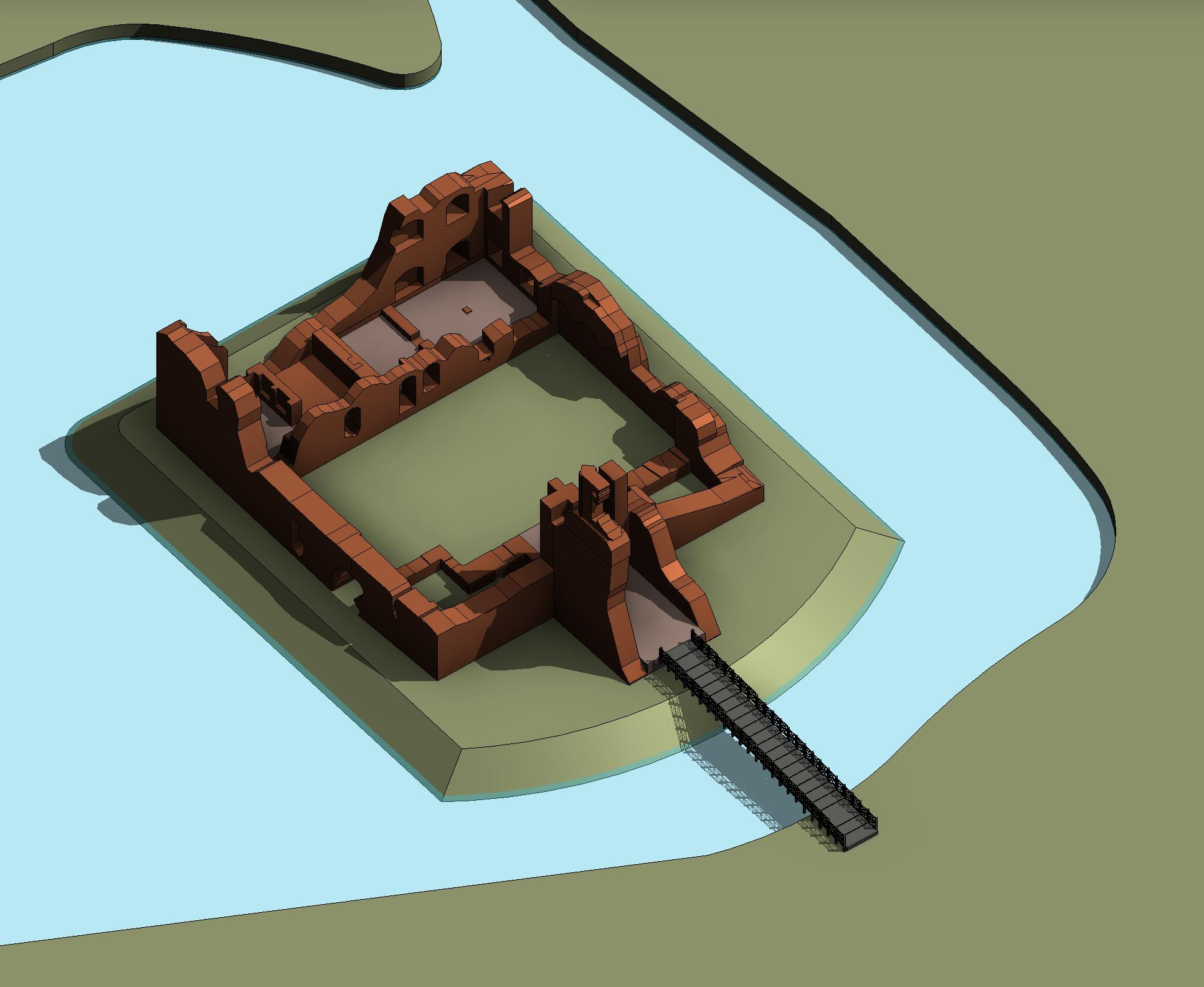
The castle was devastated during the Swedish wars, and in 1731 it was severely damaged by fire; as a result, the then owner, Gajewski, demolished the remains of the second floor. From that point on, the building slowly deteriorated, and it was abandoned after 1800, causing the building to gradually fall into ruin. In the 19th century, the castle house was lowered and covered with a thatched roof. During this time, the castle served as a farmstead. Receiving some attention after over a century, cleaning works of the castle started in 2007 and ended in 2010. The working included the uncovering of the courtyard surface, restoring the moat and filling it with water. Constructing a wooden bridge made the site accessible again. It was influential in stabilising the surviving masonry and preventing further collapse, allowing the existing elements (as of March 2026) to continue reflecting the scale and spatial characteristics of the original structure
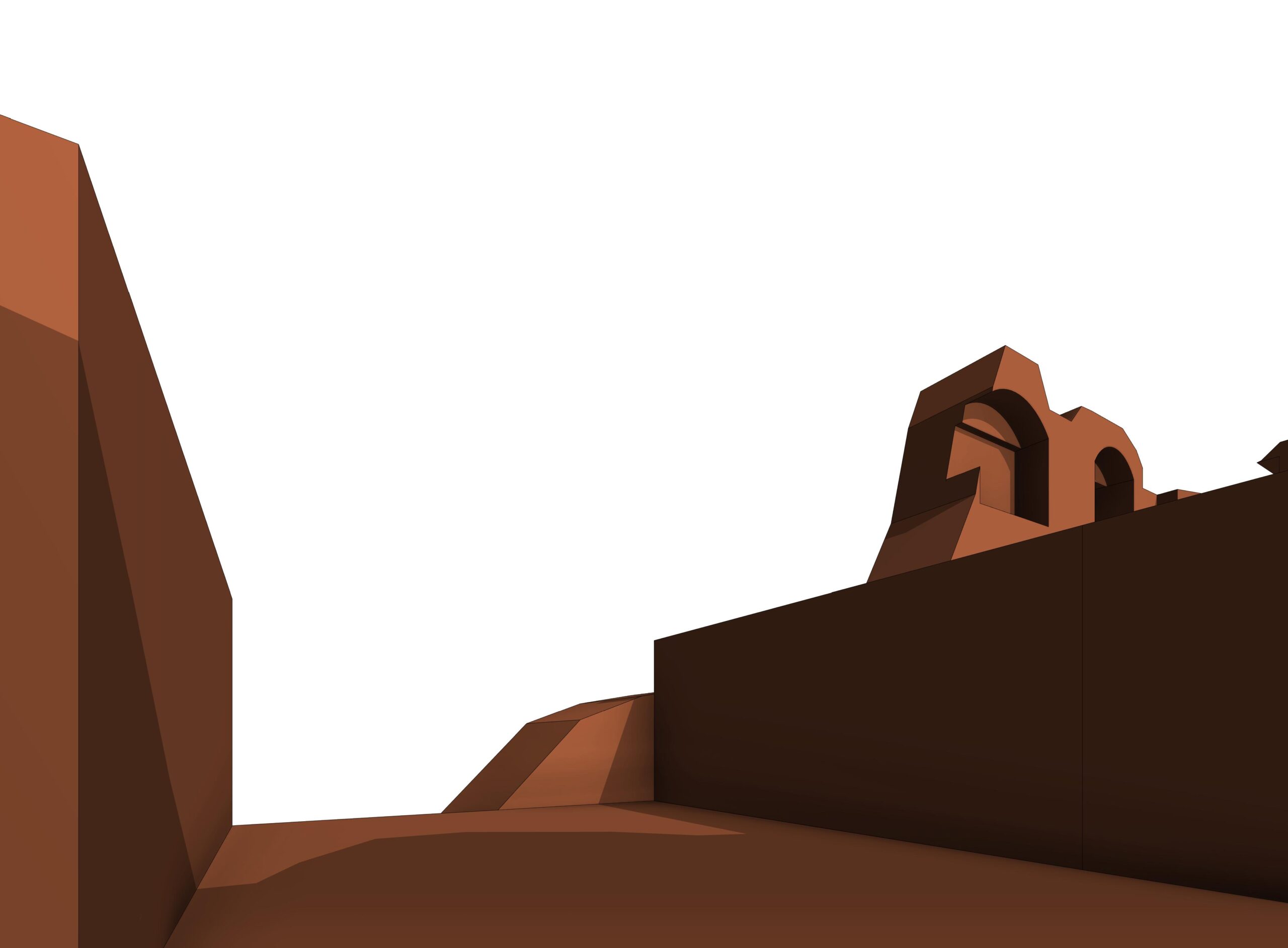
Fragments of the defensive wall and one of the walls of the tower with the gateway have survived. Remnants of the main house, preserved up to the first floor, are visible, while only remnants of the castle’s brick walls remain. The entire perimeter of the castle walls remains intact, along with the ruins of a residential building up to one storey high and remnants of internal partitions. Fragments of window openings, some with preserved original decoration, are visible to the north. An 18-metre-high segment of the western wall of the gate tower still stands, with a section of the tower’s octagon and remnants of Baroque decorations. Two openings have survived in the western curtain wall: one is likely the remains of a passage, the other the result of destruction. A fragment of the western wall has survived from both the tower and the gate passage, but it lacks facing; additionally, a relic of the ground floor remains within the wall core of the eastern wall. The northern wall is in a similar state of preservation, however, it shows a ruined and enlarged opening from the gateway. The southern wall of the tower is missing.
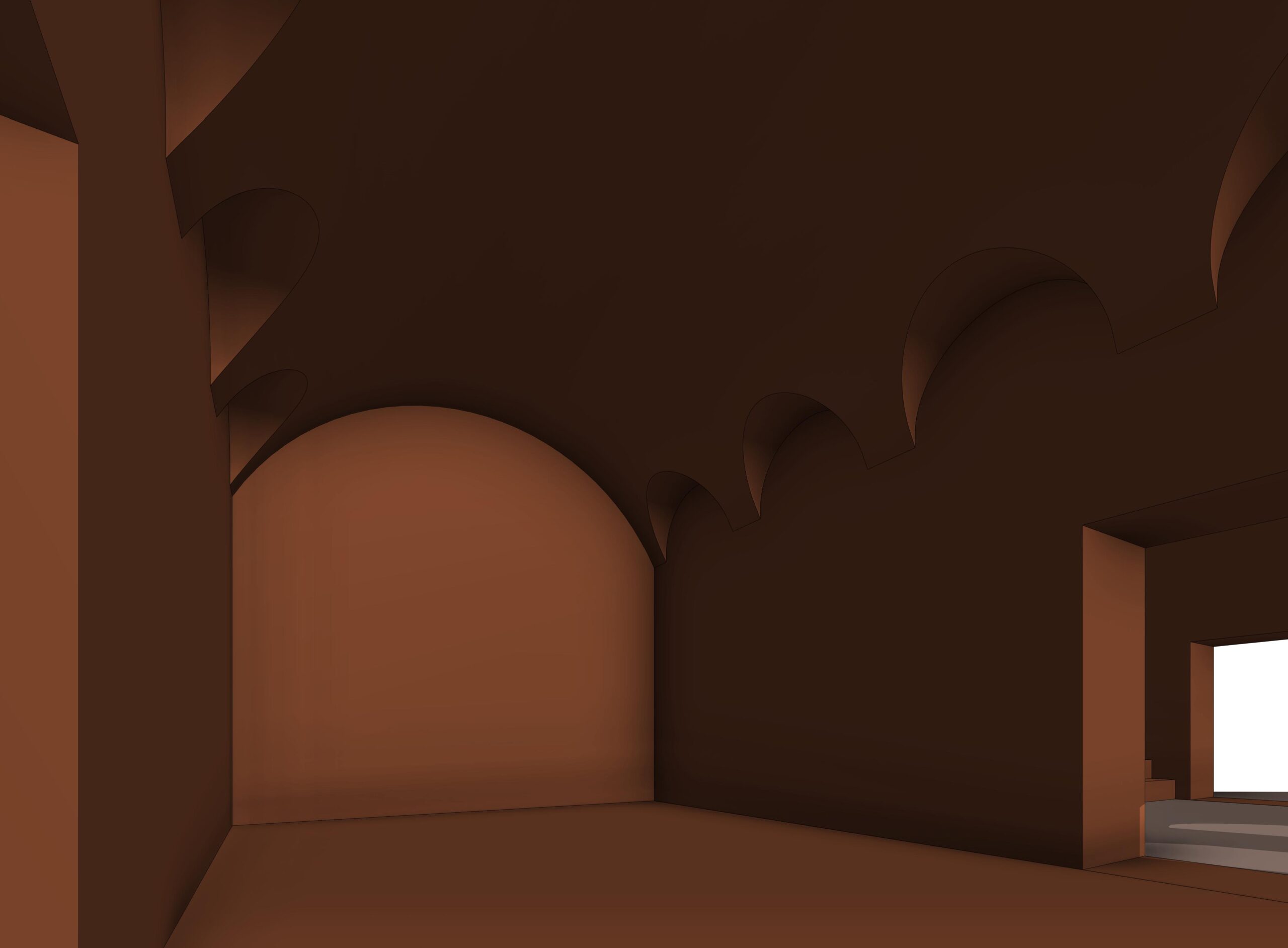
The internal floor levels are also recognisable through remains of the horizontal divisions between rooms. On the ground floor, pierced by the gateway, the trace (run-off) of a barrel vault remains on the western wall and at its junction with the northern wall. On the second level of this wall, traces of a barrel vault with lunettes are visible, as well as the attachment points for floor joists above them. In the octagonal section, between the second and fourth floors, the ceiling beam sockets have been preserved.
In the castle house, built along the northern wall of the courtyard, there are still remains of the internal spatial layout of its four ground-floor rooms. In the eastern, northern, and western sections, relic walls exist up to the height of the first floor. The best-preserved walls are in the two outer corners. The castle’s eastern curtain wall, more damaged and repeatedly breached, is lower than the others. The southern curtain wall is the best preserved but also lacks its full height.
In December 2024, conservation and accessibility works were completed, including adding a lighting system. Since then, the castle has been opened to the public with free admission, visited primarily by local residents, cyclists and hikers, amateur photographers, and families on short trips or weekends.
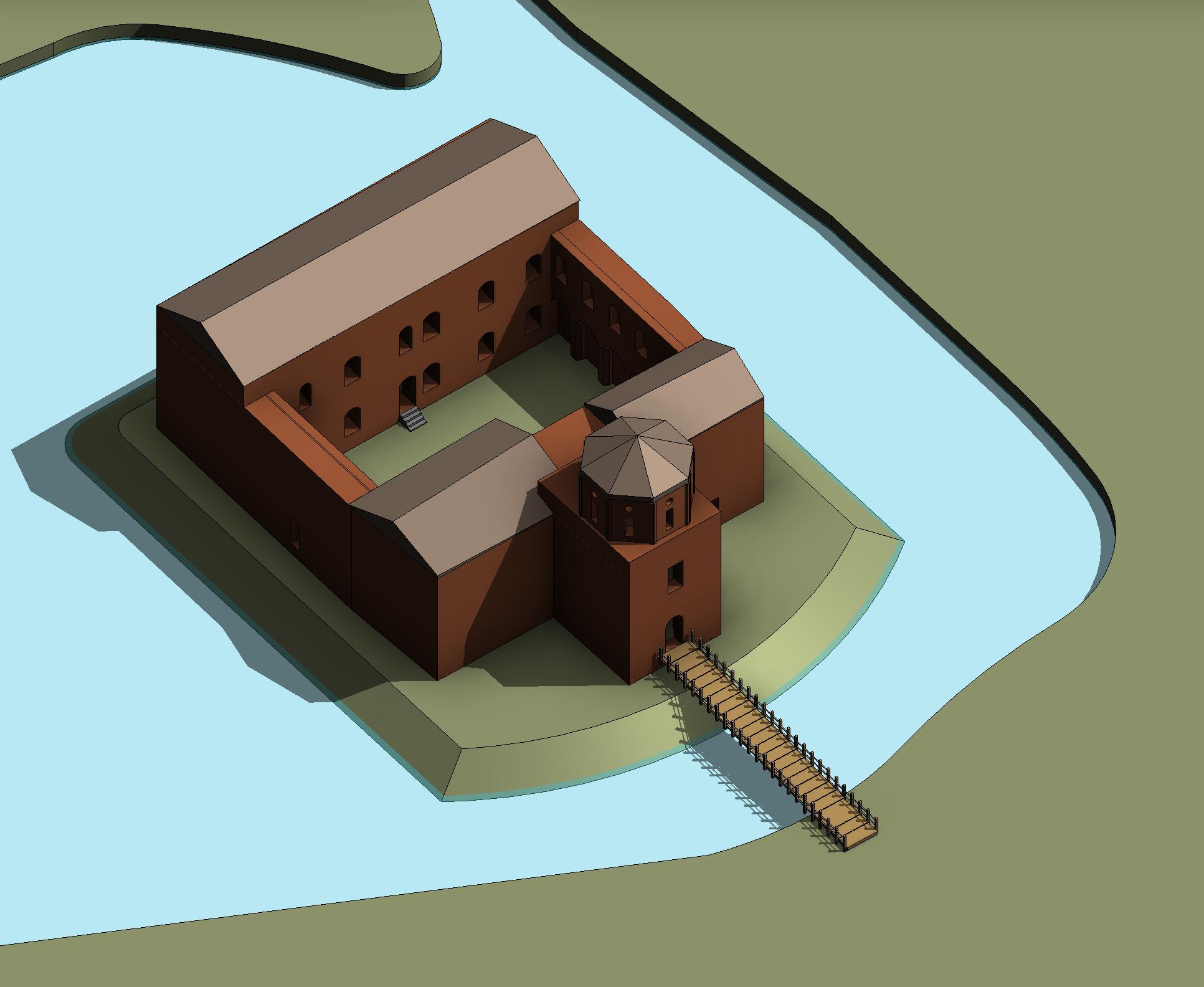
Project challenges and reflection
This case clearly shows that there is never too late to stop or slow down the demise of a structure which played multiple roles in its locality or beyond, and to give the locals an opportunity to reconnect with their multi-folded tangible and intangible heritage. Since tangible materiality of the castle and intangible stories and legends around the site are related, it is expected that maintaining the castle also helps keeping the local stories alive in the people’s minds. Nevertheless the intangible life of the castle adds other layers of attraction to the site which can be seen as opportunity for bringing the castle to local life.
Given the major renovation and reconstruction of the castle, it has two plans: before and one after modifications by the new owner in 17th century, which included the addition of a tower and sections of eastern and western arcades. In this modelling, to represent the state of “Then” we used the second plan – after medicalisations, as the remains of the castle now shows remains of the added sections. Additionally, the issue of insufficient accessible documentation existed. For example, the precise heights of the buildings have not yet been determined. Defensive walls are 2 metres thick, but their exact height was difficult to determine, the model used the dimensions mentioned in the references for (3.5 meters for walk-walls and around 6 meters for the total height), as no crown has survived anywhere, and there is no evidence of the exact dimension of their original height.
References
- Guerquin B., Zamki w Polsce, Warszawa 1984.
- Jolanta Welc-Jędrzejewska, Regional Branch of the National Heritage Board of Poland in Łódź, July 18, 2014. Last Accessed 10/04/2026 https://zabytek.pl/pl/obiekty/besiekiery-ruiny-zamku-2
- Kajzer L. Zamki i dwory obronne w Polsce centralnej, Warszawa 2004.
- Kenneth Flugrad, (June 5, 2024), Besiekiery Castle Ruins, Atlas Obscura, last Accessed 10/04/2026 https://www.atlasobscura.com/places/besiekiery-castle-ruins-poland
- Leksykon zamków w Polsce, red. L.Kajzer, Warszawa 2003.
- Tomala J., Murowana architektura romańska i gotycka w Wielkopolsce, tom 2, architektura obronna, Kalisz 2011.
- Zamki środkowopolskie. Część I, Besiekiery, Lutomiersk, Dom Stary w Łęczycy, red. T.Poklewski, Łódź 1977.
The images and architectural modelling shown here are for illustration purposes only and may not be an exact representation of the property. Silk Cities is not liable for subsequent updates, errors, or omissions of data or any updates on the conservation of the property afterwards.