

Timcheh of Haji Abdul Khaliq Niazi
Located in one of the oldest and most famous caravanserais in Herat, Zard Caravanserai also known as the Kandahari Caravanserai, is a lesser known Timcheh of Haji Abdul Khaliq Niazi. Timcheh (or Timchēh) refers to a small caravanserai and buzzing hub of similar commercial activities within a larger traditional bazaar. The word literally means ‘anything round, compact, and expansive’ in Persian. The Zard caravanserai was built over 150 years ago along the main axial roads from the city gates into the town centre. Those roads accommodated intense commercial activities serving incoming caravans.
Timcheh of Haji Abdul Khaliq Niazi was built later than the Caravanserai, in 1940. It appears that the Caravanserai and Timcheh belonged to Haji Abdul Khaliq Niazi, a famous and wealthy merchant from Herat who was known for his charity and good deeds. He was a significant investor in Afghanistan who was famous in Kabul, Kandahar, and Herat, as reported in the book “Herat in the Age of Malikyar” written by Akhi Karukhi.
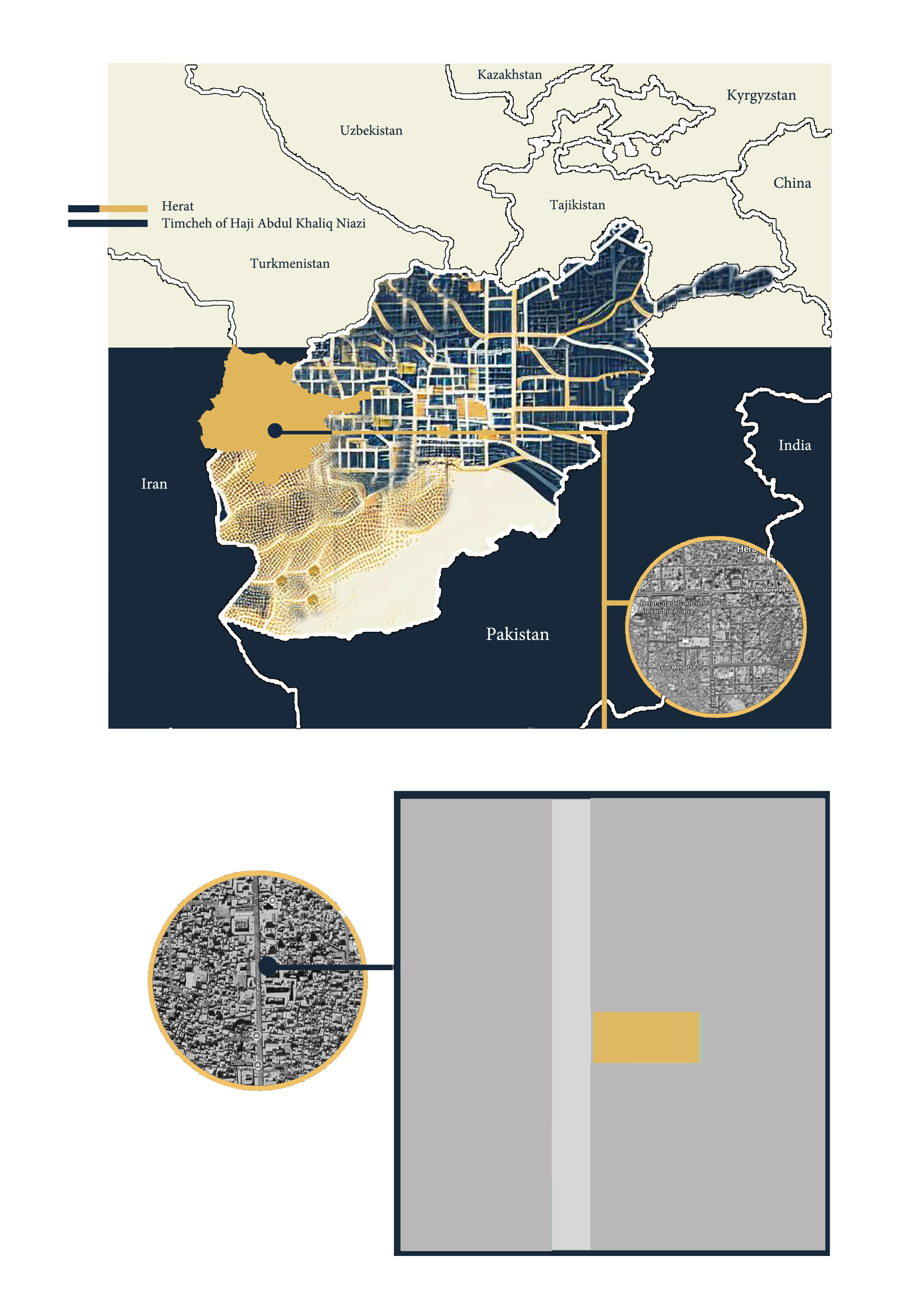
Site Location
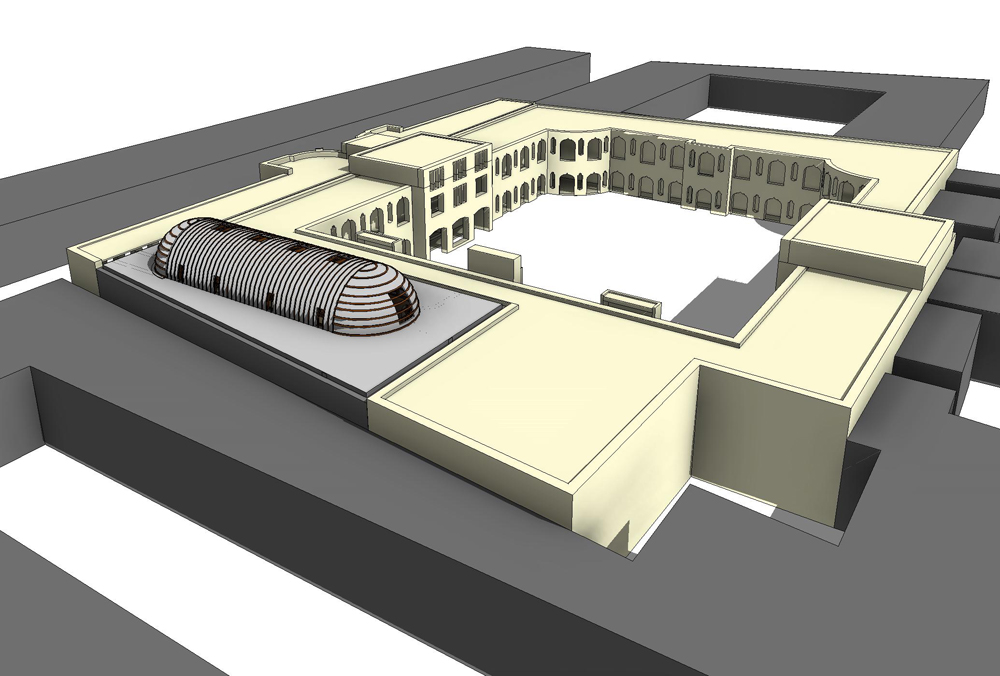
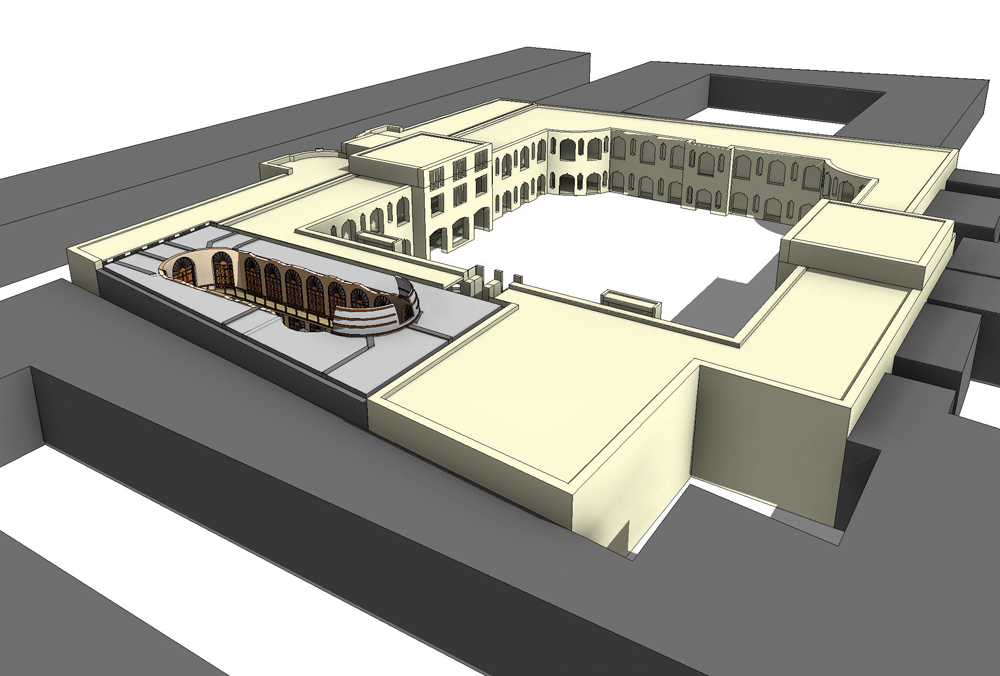
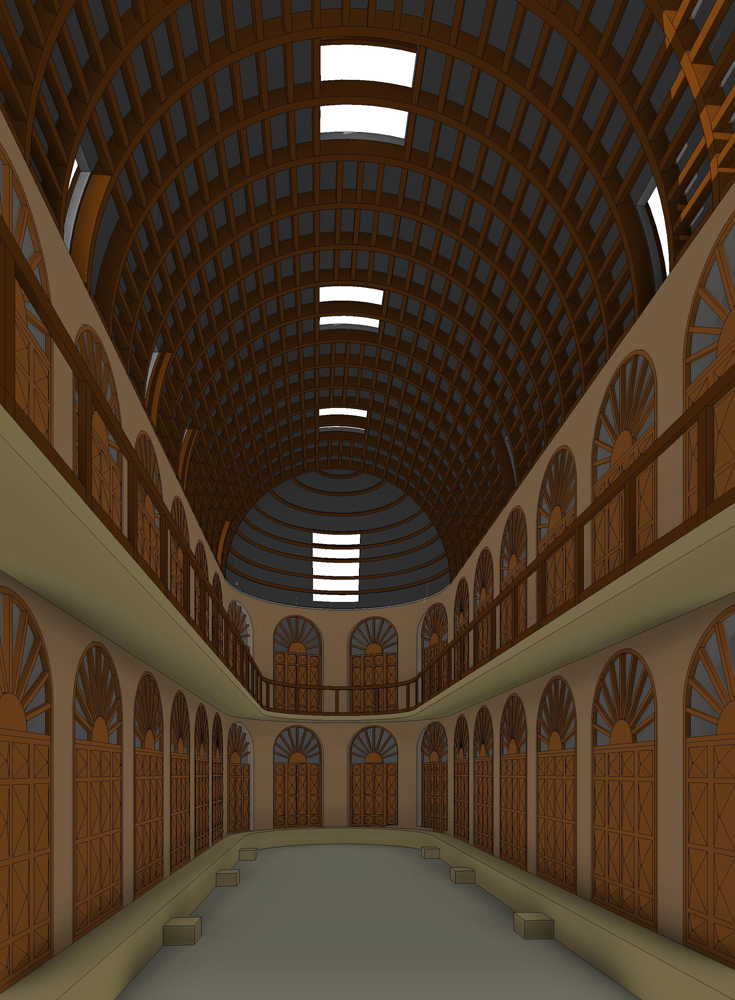
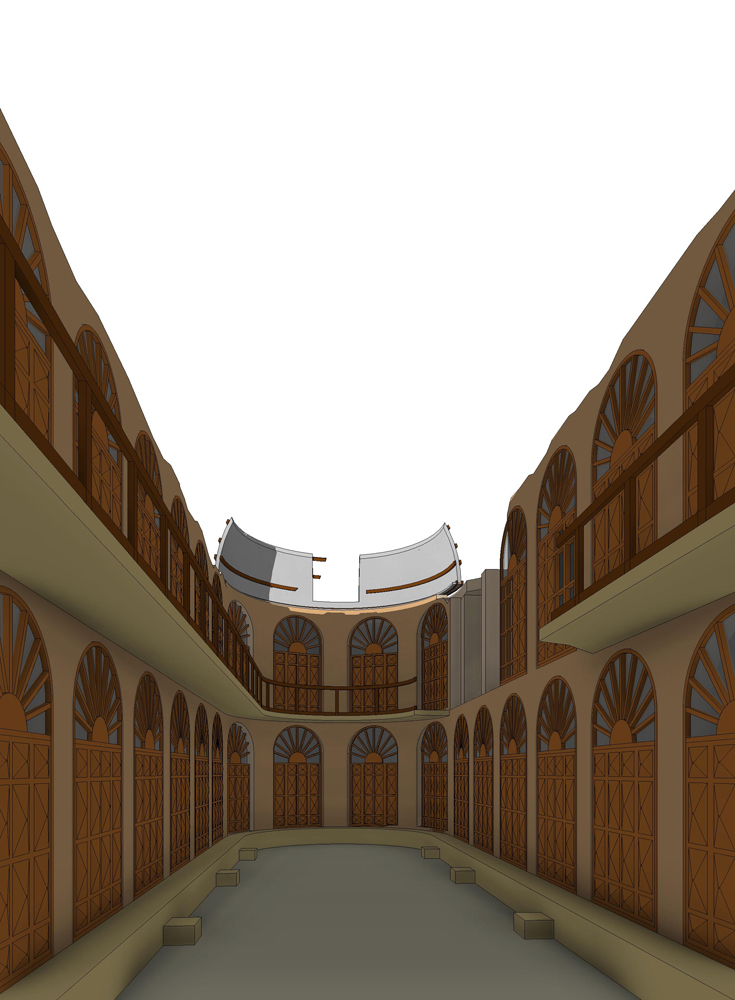
Then
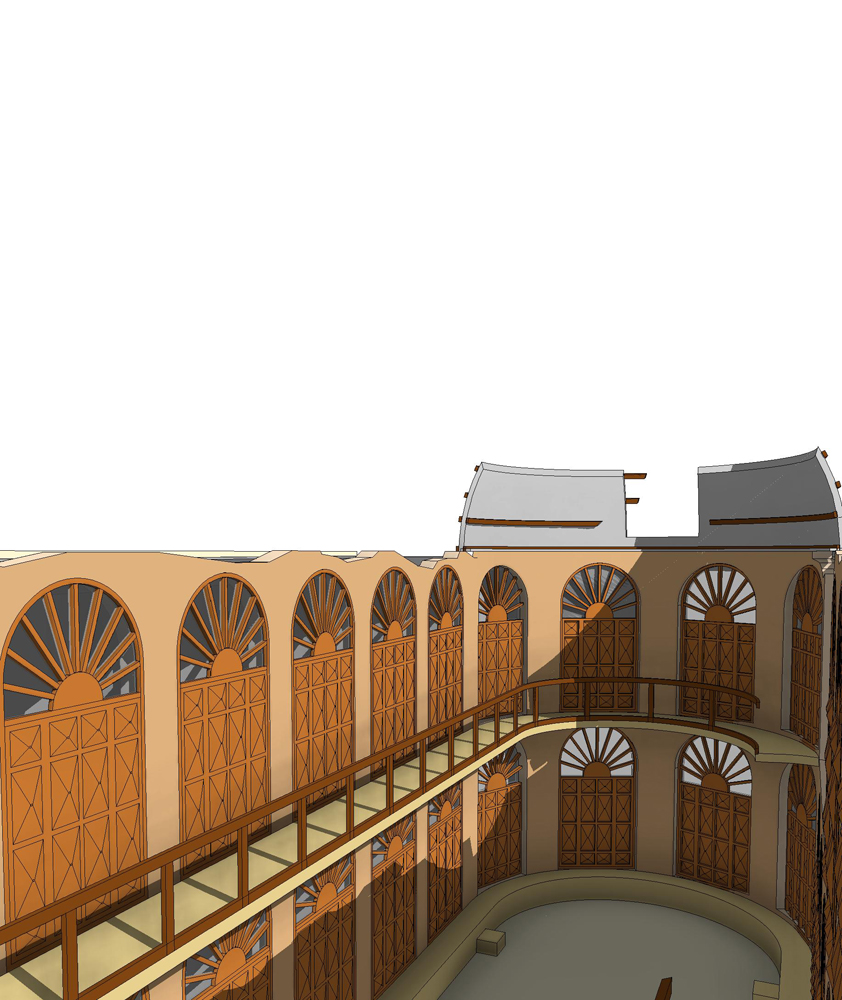
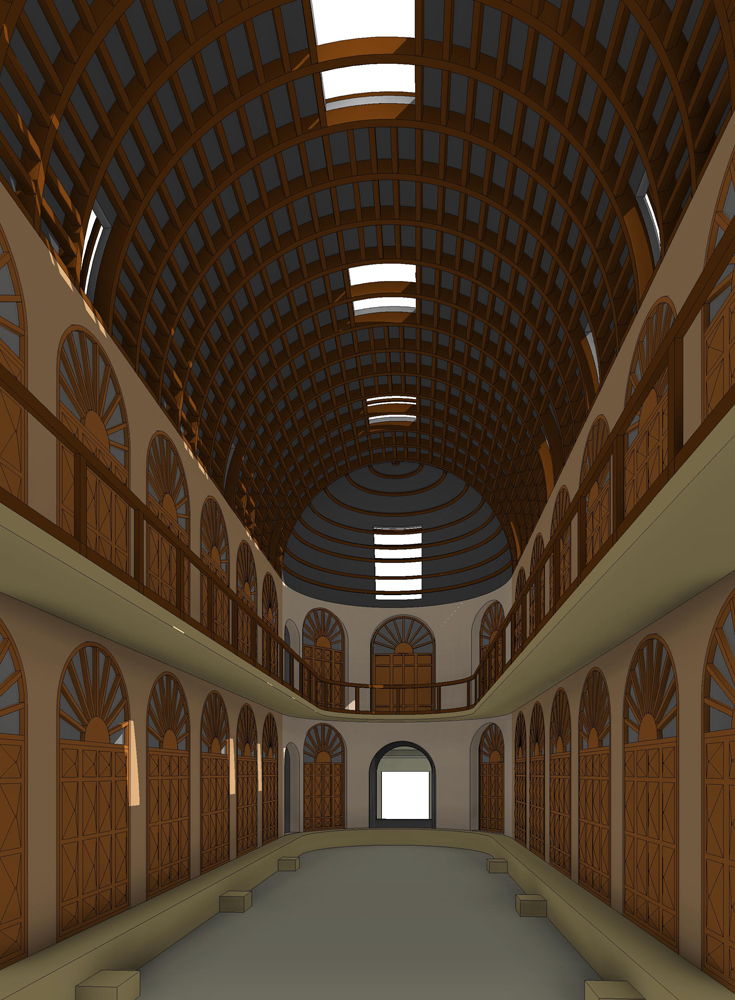
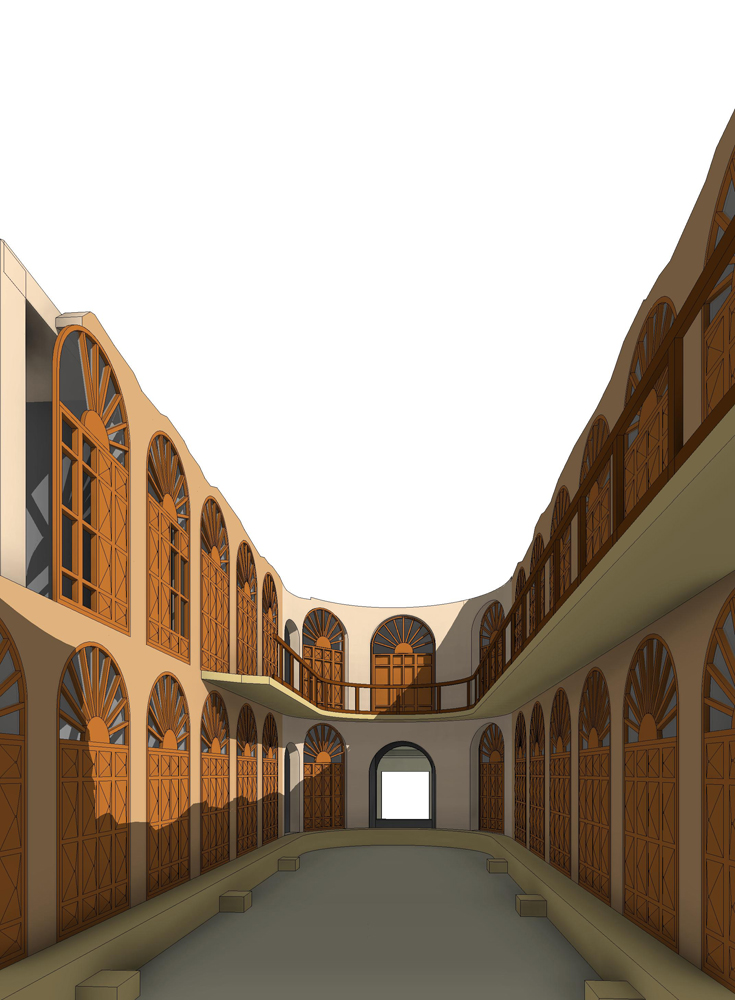
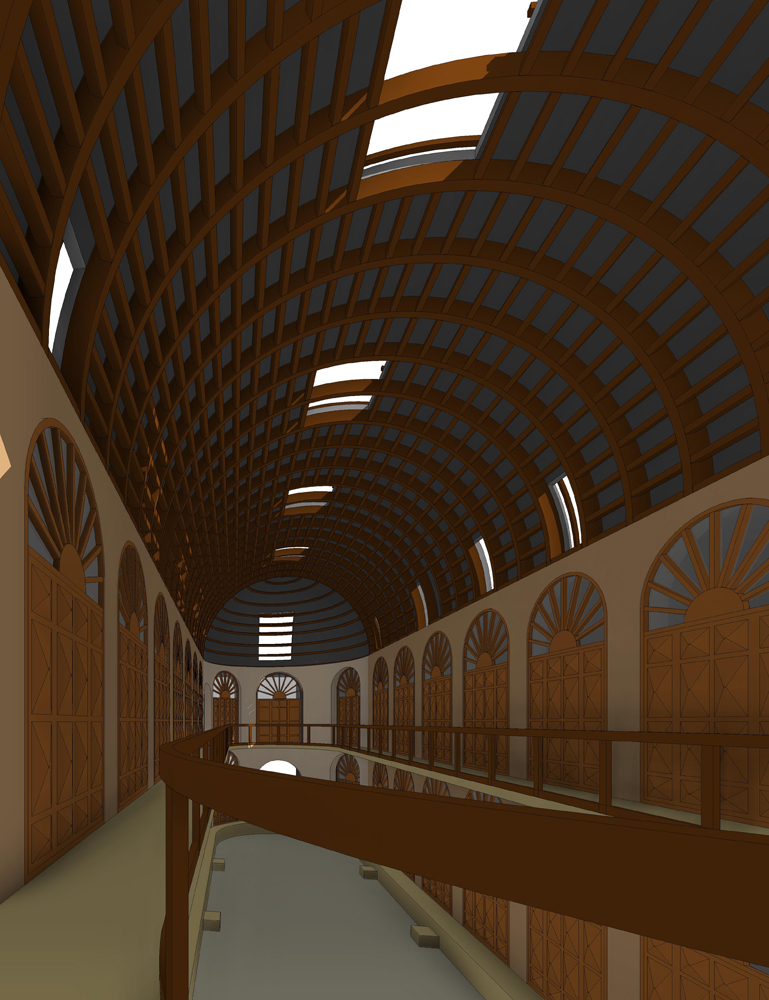
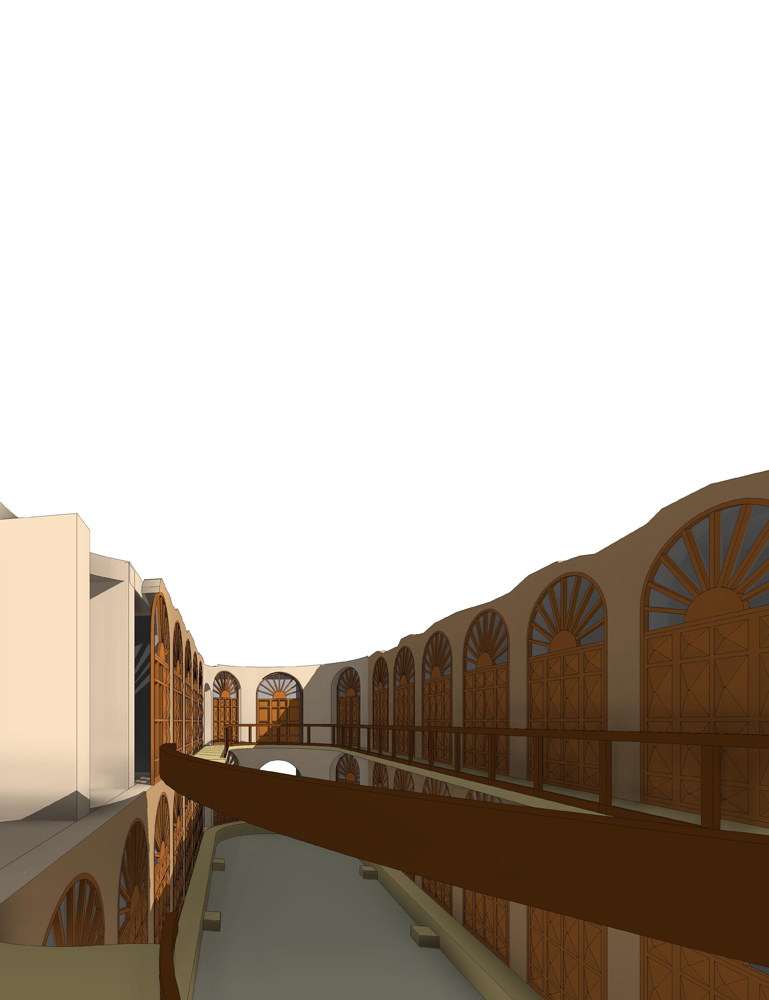
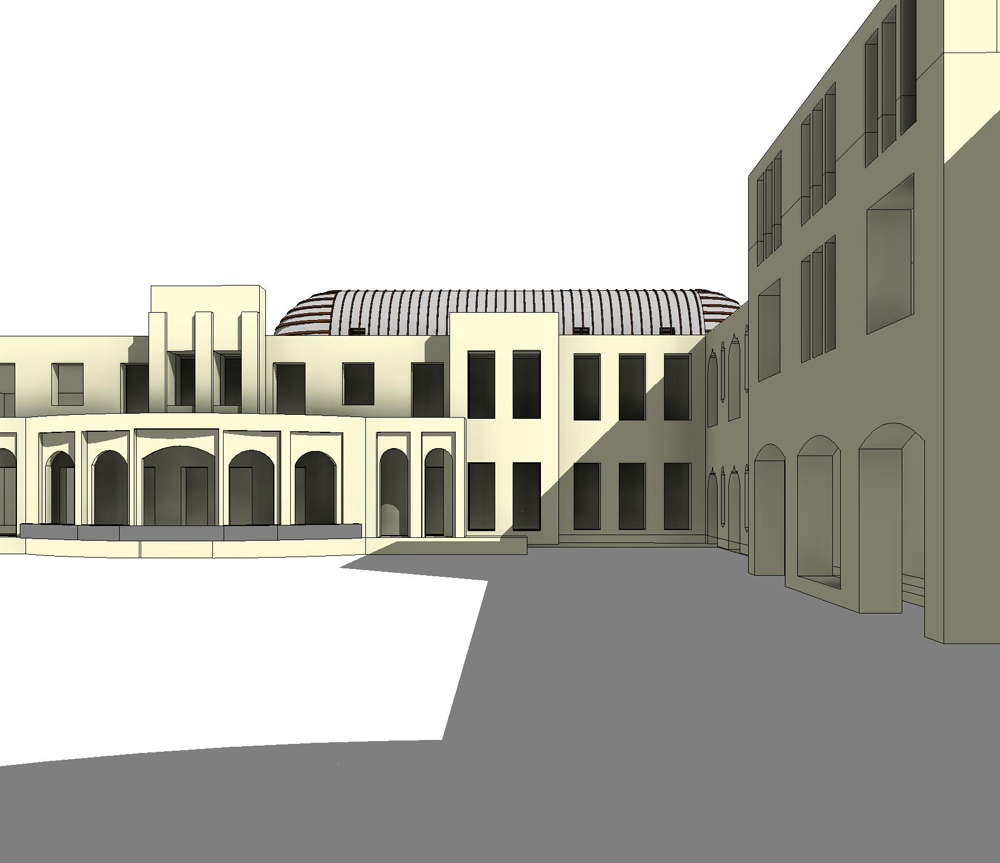
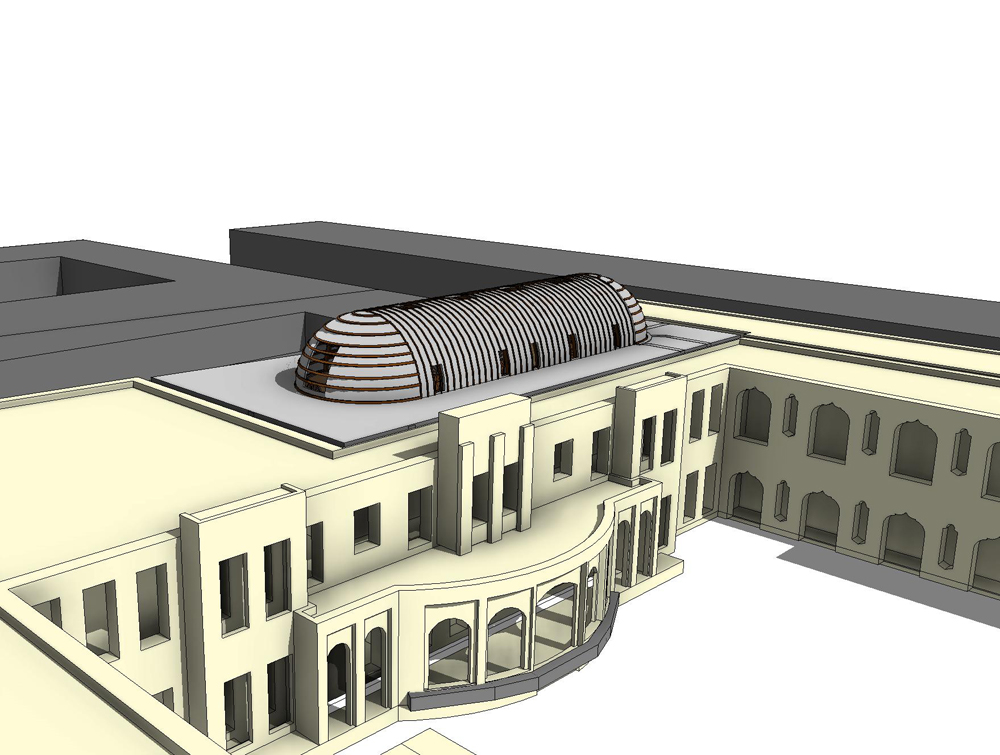
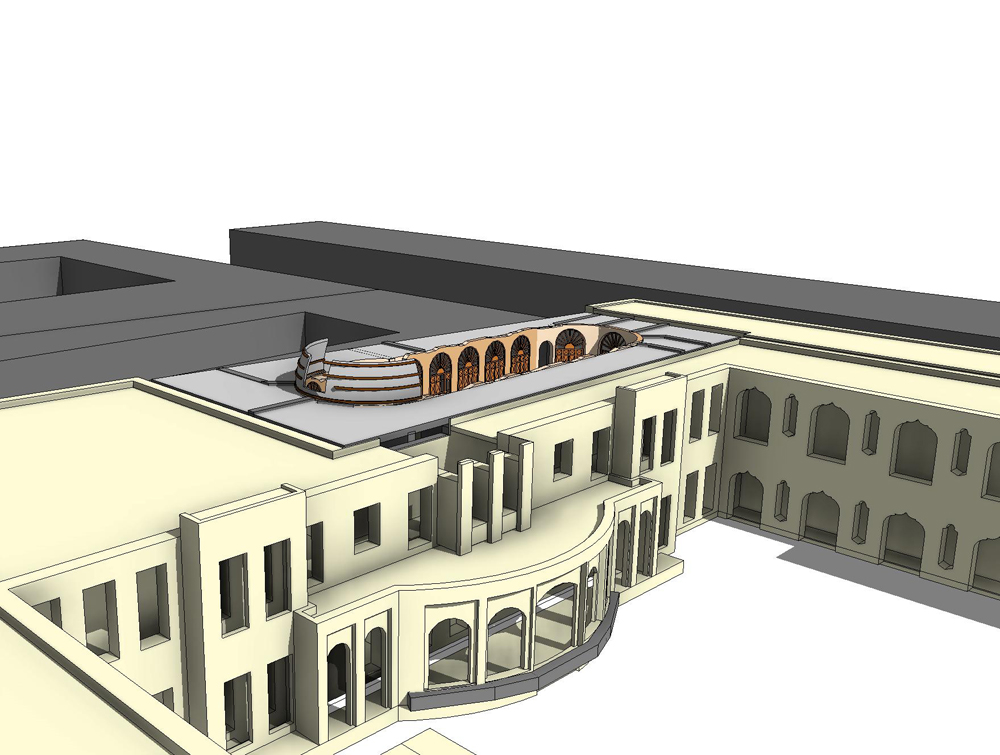
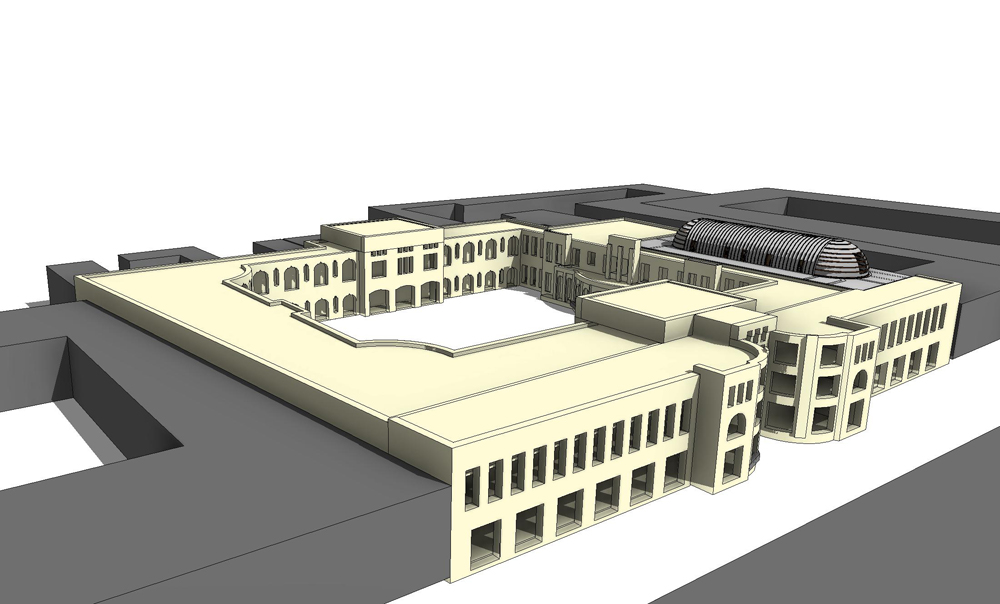
The Timcheh occupies the southern side of the Caravanserai, which itself is square with interior enclosed open space. The Timcheh was laid out as a collection of double-storey speciality shops around an interior rectangular atrium with semicircle ends with a covered vaulted roof. A row of skylights allowed for natural lighting and ventilation, creating a cool, shaded space suitable for Afghanistan’s hot summers. The construction material included bricks, lime, and wood for the roof. The atrium was surrounded by arched shopfronts. Similar to other Timchehs it was a buzzing node of selling goods and commerce.
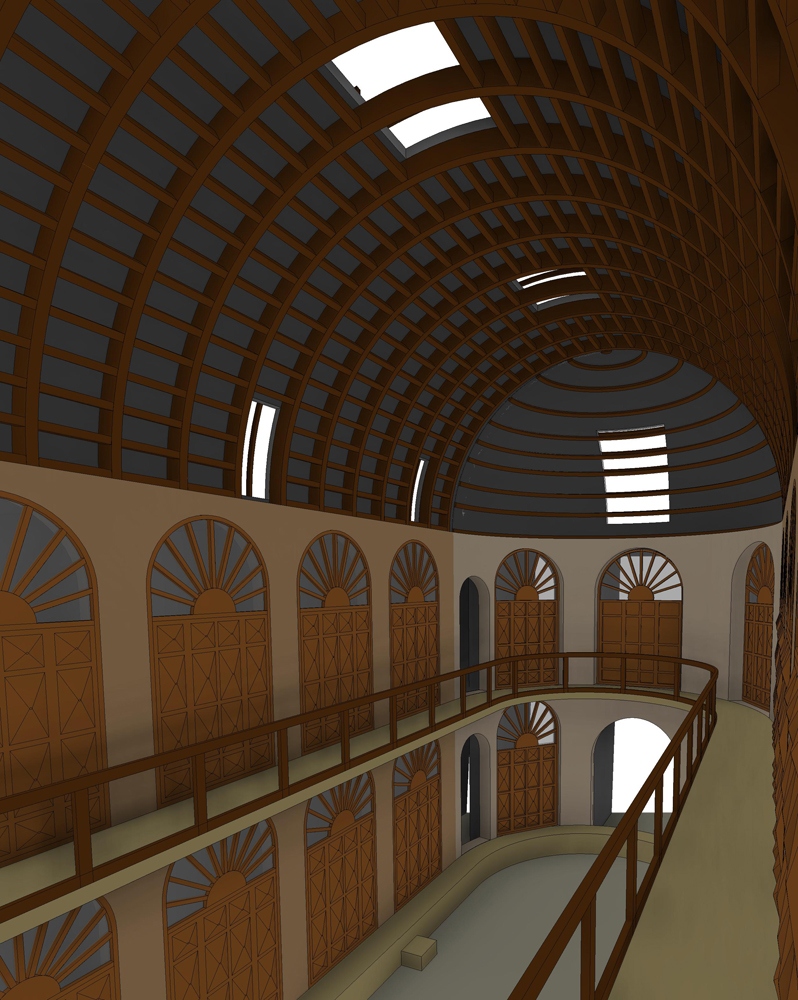
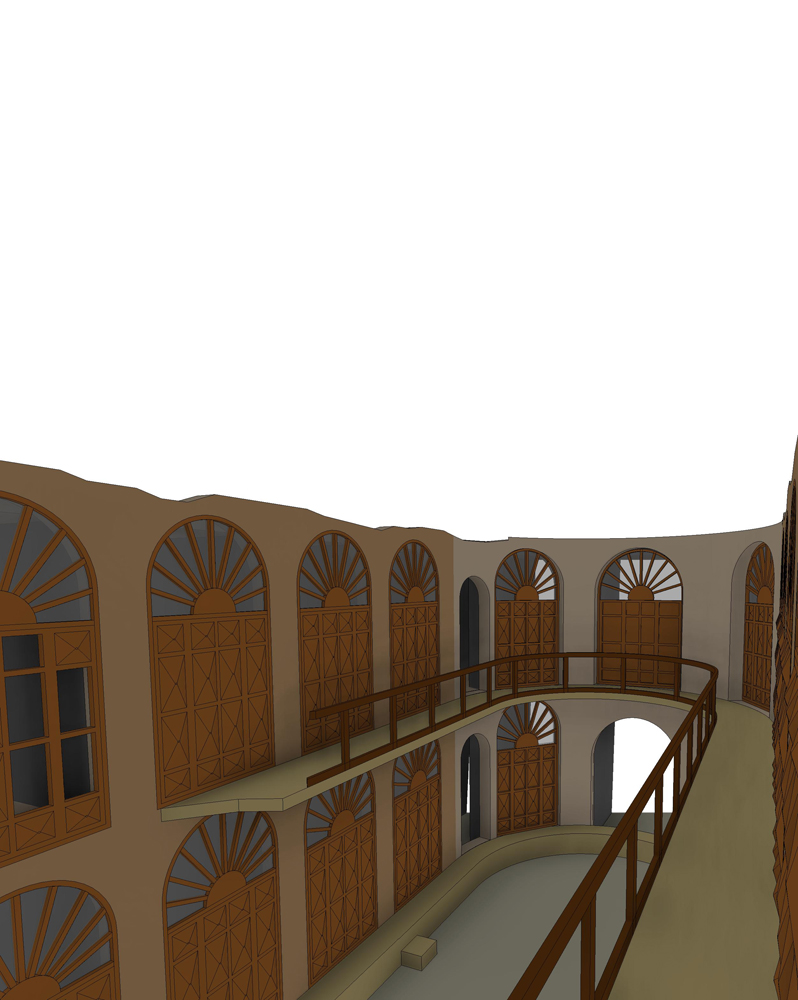
Now
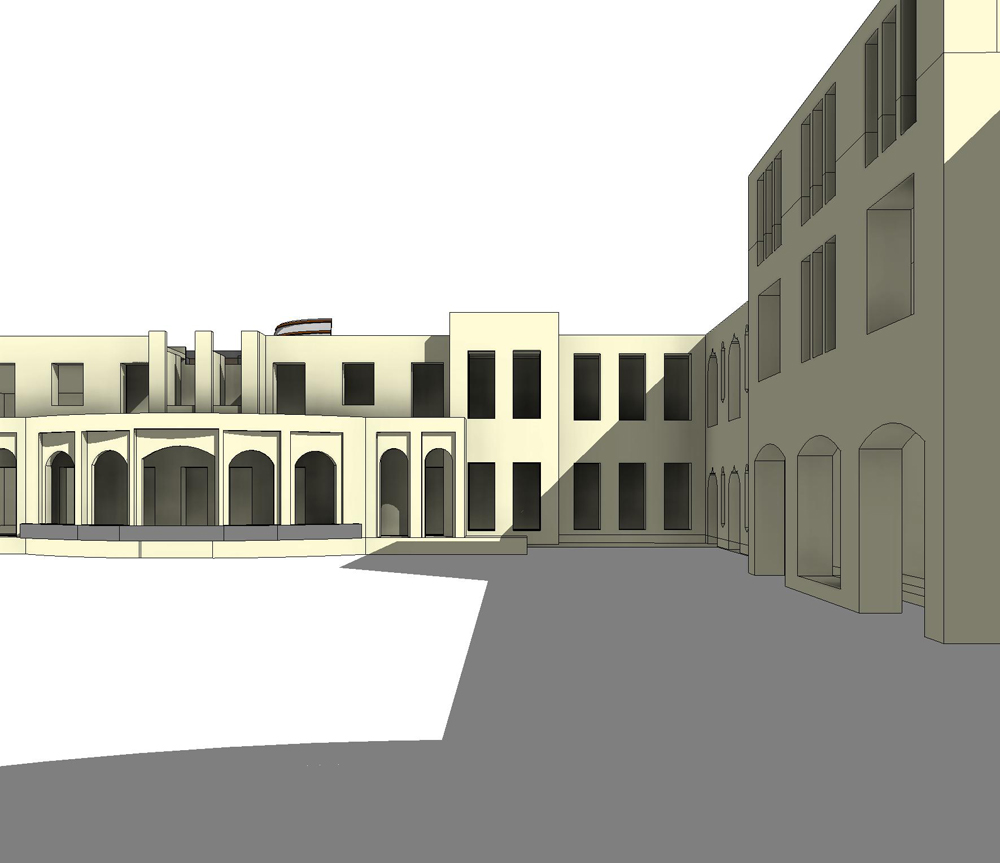
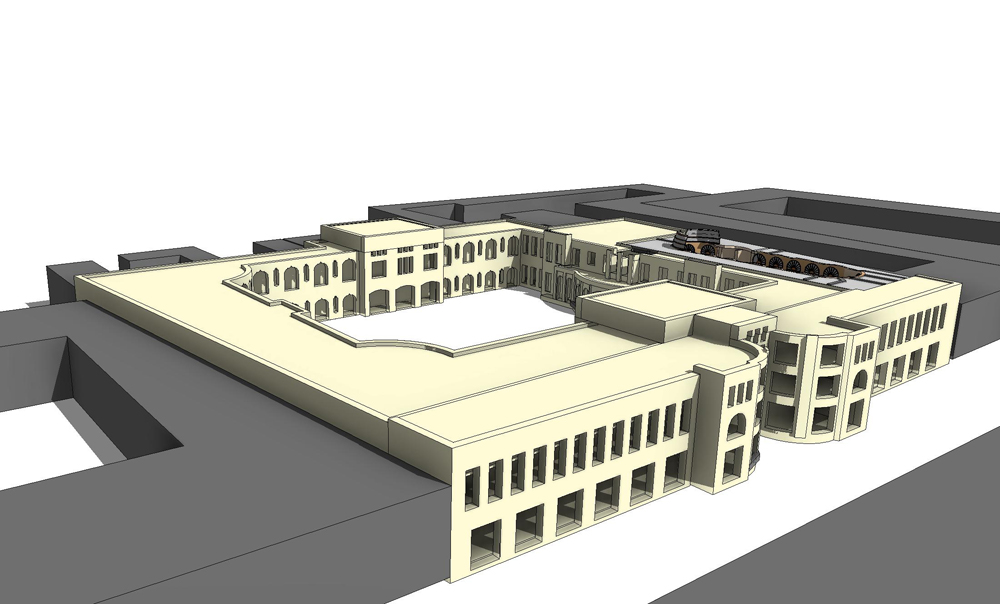
The Timcheh and main Caravanseri have suffered from negligence and lack of maintenance of the authorities and owners. The Caravanseri recently has been used as a storage for wheat. On the 8th April 2019, after heavy rains, the roof of Timcheh collapsed and parts of its southern walls and the stairs suffered extensive damage. Currently, both the Timcheh and the caravanserai are in serious need of repair, showing wide cracks and are at the risk of further damage. Even climbing to the upper floor may cause the collapse of the staircase. Both on the lower and ground floor, its wide, run-down-looking wooden doors are shut and crumbling.
Before Taliban’s return to power in 2022, efforts were to be made to begin preparations for the repair and conservation of the Caravanserai in cooperation with the Ministry of Information and Culture. However, purchasing the Timcheh became a struggle, given its private ownership. Since 2022, there has been no reported effort of restoring the Timcheh.
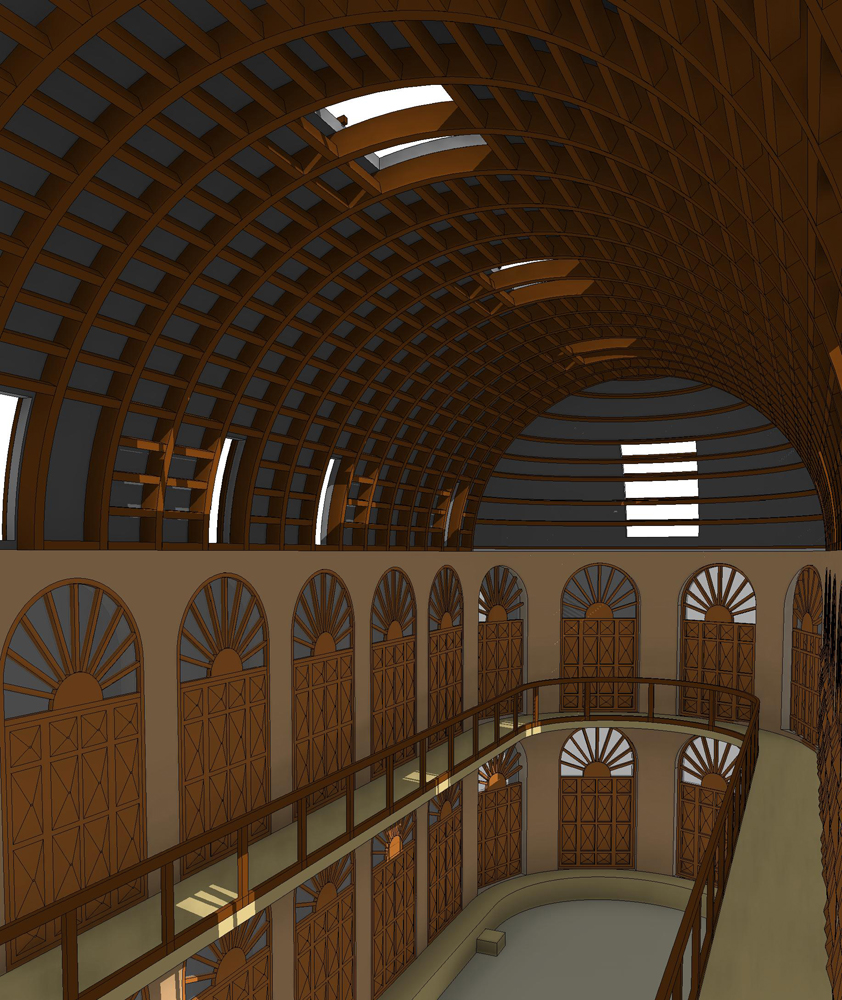
Challenges and Reflection
The current situations and conditions in Afghanistan made it difficult to acquire detailed information about the Timcheh’s history and architectural details. Even searching for literature or any textual and visual documentation became a challenge. The research team obtained the dimensions of the building through Google Earth as precisely as possible and used the similarity between the Timcheh and Arbabzadah Serai in Herat, built in the same era and restored by the Agha Khan Foundation in 2008, to determine architectural proportions and dimensions. The team also depended on locals from Herat to provide recent photos of the current situation of the Timcheh.
The case sheds light on the complexities of ownership matters of urban heritage that exist in many historic cities. There are needs for special measures, incentives and policies to encourage owners or new owners and bring the private sector on the same page as other concerned stakeholders might be on maintaining the property.
As a place of intense commercial activities, the importance of Caravanserai and Timcheh in whatever city that they are, goes far beyond the physical. It is intertwined with urban life and economy. Failure to bring back to life of such historical buildings with a previous buzz could result in the loss of yet another valuable historical urban element in Herat both tangibly and intangibly.
Acknowledgements
We would like to express our sincere gratitude to Mr. Ramin Afshar for introducing this case to us. The photographs they kindly shared not only enhanced our documentation but also brought the subject to life in a way that words alone could not achieve.
References
- Afghan Voice Agency (n.d.) تخریب قسمتهایی از چند بنای تاریخی در ولایت هرات [Destruction of parts of several historical buildings in Herat Province]. Available at: https://tinyurl.com/HeratAVA (Accessed: 18 September 2025). (in Persian)
- Bakhtar News Agency (2025) هرات؛ کاروانسرای زرد و تیمچه حاجی عبدالخالق نیازی [Herat; Caravanserai Zard and Timcheh Haji Abdolkhalegh Niazi], 22 February. Available at: https://tinyurl.com/HeratBakhtar (Accessed: 13 September 2025). (in Persian)
- Corrias, A. (2017) The city committed to rescuing the history of Afghanistan. Chasing the Unexpected, 15 November. Available at: https://tinyurl.com/HeratHistory (Accessed: 18 September 2025).
- Gammell, C. P. (2016). The Pearl of Khorasan: A History of Herat. Oxford University Press.
- Herat Bastan (n.d.) هرات؛ کاروانسرای زرد و تیمچه حاجی عبدالخالق نیازی [Herat; Caravanserai Zard and Timcheh Haji Abdolkhalegh Niazi]. Available at: https://tinyurl.com/HeratBastan (Accessed: 13 September 2025).(in Persian)
- Islamic Culture and Relations Organization (n.d.) Timcheh (Arcade). Available at: https://tinyurl.com/TimchehArcade (Accessed: 10 September 2025).
- The Aga Khan, Historic Cities Programme, Afaghnistan: Preserving Historic Heritage, Edited by Philip Jodidio, PRESTEL, Munich · London · New York, 2017
The images and architectural modelling shown here are for illustration purposes only and may not be an exact representation of the property. Silk Cities is not liable for subsequent updates, errors, or omissions of data or any updates on the conservation of the property afterwards.